AI Auto-Map Explained: How BrizoConsol Automatically Maps Entity Accounts to Your Group Chart of Accounts
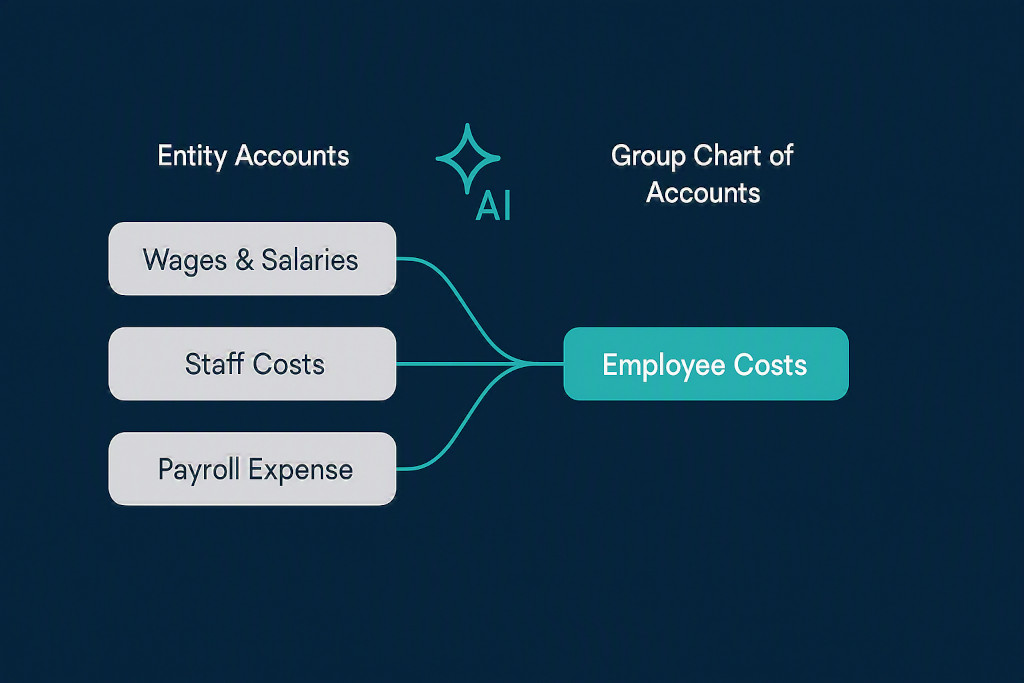
Before a multi-entity group can produce its first consolidated set of accounts, every entity in the group must have its chart of accounts mapped to the group-level reporting structure. For a group with three or four entities using the same accounting system, this mapping exercise might take a few hours. For a group with ten or fifteen entities across multiple accounting platforms, each with hundreds or thousands of accounts that evolved independently over years of operation, it can take days. This is not a glamorous problem, but it is a real one, and it is one of the most common reasons that consolidation projects stall between initial setup and first meaningful output. BrizoConsol’s AI Auto-Map feature addresses this problem directly, using machine learning to suggest account mappings automatically and dramatically reducing the time finance teams spend on this foundational step.
This post explains what AI Auto-Map is, how it works in practice, where it is most valuable, and what finance teams should know about reviewing and confirming the suggestions it produces. It also covers how AI Auto-Map fits into the broader account mapping workflow in BrizoConsol, including how mappings are stored, updated, and applied consistently across all consolidation runs.
Why Account Mapping Is One of the Hardest Parts of Consolidation Setup
Every accounting system generates a chart of accounts that reflects the preferences, history, and reporting requirements of the business that built it. Two subsidiaries in the same group might use the same accounting platform but have arrived at entirely different account numbering conventions, different levels of granularity in their expense categorisation, and different treatments for accounts that the group structure requires to be presented in a specific way. A subsidiary acquired three years ago brings its legacy chart of accounts with it. A subsidiary that was built from scratch by a finance team with a preference for detailed cost centre reporting might have four hundred expense accounts where another subsidiary has forty. Neither approach is wrong, but they cannot be compared or consolidated without a layer of mapping that translates each entity’s account structure into a common group framework.
Stop building consolidations in spreadsheets.
BrizoConsol automates multi-entity consolidation — setup in minutes, reports the same day.
The traditional approach to this mapping exercise is manual: a finance team member opens a spreadsheet, lists every account from every entity, and works through the list assigning each one to the appropriate group account. This is painstaking work. It requires a detailed understanding of both the entity-level account structure and the group reporting structure. It is easy to miss accounts, especially in large charts of accounts where similar account names appear in slightly different forms across entities. And it needs to be updated whenever a new account is added to any entity, which in an active business happens regularly. AI Auto-Map replaces the bulk of this manual work with an automated suggestion engine that handles the initial mapping pass, leaving the finance team to review, confirm, and adjust rather than build from scratch.
How AI Auto-Map Works in BrizoConsol
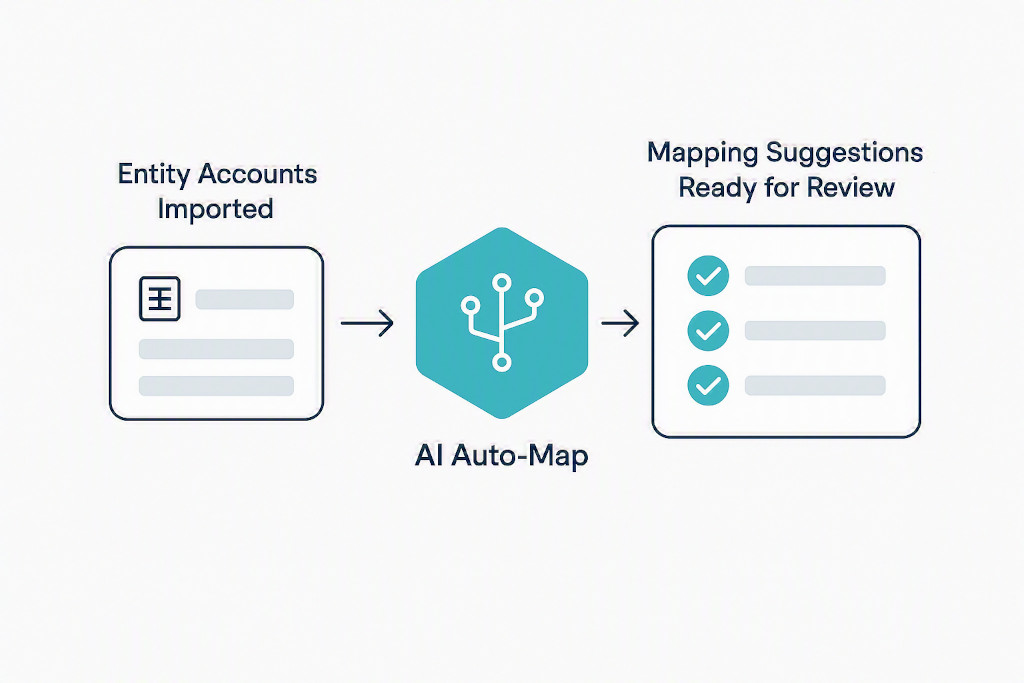
When you connect an entity to BrizoConsol and import its chart of accounts, AI Auto-Map analyses the account names, account codes, and account types from that entity and compares them against the group chart of accounts that has been configured for the consolidation. Using a combination of natural language processing and pattern matching trained on financial account naming conventions across a wide range of accounting systems and industries, the feature produces a suggested mapping for each entity account, identifying the group account it most closely corresponds to. These suggestions are presented to the finance team as a mapping review screen, where each suggestion can be accepted, adjusted, or overridden before being saved as the confirmed mapping for that account.
The suggestion engine does not simply match on exact account names. It understands that “Wages and Salaries,” “Staff Costs,” “Employee Remuneration,” and “Payroll Expense” are all describing the same underlying cost category and should typically map to the same group account. It recognises common account code structures and uses them as additional signals when account names are ambiguous or abbreviated. It handles accounts that appear under different headings in different entities, such as depreciation charges that some entities record as an operating expense and others as a separate line item. The goal is to reduce the proportion of accounts that require manual review to a small minority, rather than requiring the finance team to manually assess every single account from every entity in the group.
Where AI Auto-Map Delivers the Most Value
The feature is most valuable in three situations. The first is initial consolidation setup, when a group is connecting its entities to BrizoConsol for the first time and needs to build the account mapping from scratch. Without AI Auto-Map, this involves mapping every account across every entity manually, which for a large group can represent a significant investment of finance team time before any consolidation output can be produced. With AI Auto-Map, the bulk of that mapping is handled automatically, and the finance team’s effort is concentrated on reviewing and confirming suggestions rather than constructing every mapping from a blank slate. For many groups, this reduces the time from entity connection to first consolidation run from several days to a matter of hours.
The second situation is the addition of a new entity, whether through acquisition, incorporation, or the connection of a previously excluded subsidiary. Whenever a new entity joins the group structure in BrizoConsol, its chart of accounts needs to be mapped to the group framework. AI Auto-Map runs automatically when a new entity is connected, producing an initial set of mapping suggestions for the new entity’s accounts before the finance team has to review anything manually. This is particularly valuable during acquisition integration, when finance teams are typically under time pressure to get the new entity included in the consolidated reporting and have limited time for manual mapping work.
The third situation is account structure changes. When an entity adds new accounts to its chart of accounts during the year, whether to support a new project, a new cost centre, or a new reporting requirement, those accounts need to be mapped to the group framework before they appear correctly in the next consolidation run. BrizoConsol identifies unmapped accounts automatically and triggers AI Auto-Map suggestions for any new accounts detected since the last mapping review. This means that account additions do not create a backlog of unmapped accounts that accumulates silently until it causes problems at month-end. Finance teams are notified of new accounts and presented with mapping suggestions as soon as the accounts appear in the entity data, keeping the mapping layer current with the underlying entity structures throughout the year.
Reviewing and Confirming AI Auto-Map Suggestions
AI Auto-Map produces suggestions; it does not make mapping decisions autonomously. Every suggestion must be reviewed and confirmed by a member of the finance team before it is applied to the consolidation. This is an intentional design choice. Account mapping has direct consequences for the consolidated financial statements, and it is important that the finance team maintains full visibility and control over how entity accounts are classified in the group reporting structure. The review screen in BrizoConsol is designed to make this process as efficient as possible, presenting suggestions in priority order with higher-confidence suggestions grouped separately from lower-confidence ones that may require more careful review.
For accounts where the AI suggestion is clearly correct, the review typically takes a few seconds per account. A finance team member can scan the suggested mapping, verify that it aligns with their knowledge of the entity, and confirm it with a single click. For accounts where the suggestion is less certain, the review screen displays the account name, the account type, and the group account being suggested, alongside any alternative group accounts that scored highly in the matching process. The reviewer can select a different mapping from the alternatives presented or search the group chart of accounts manually if none of the presented options is correct. Once confirmed, the mapping is saved and applied to all historical and future consolidation runs for that entity, ensuring consistency across reporting periods.
How Confirmed Mappings Are Stored and Maintained
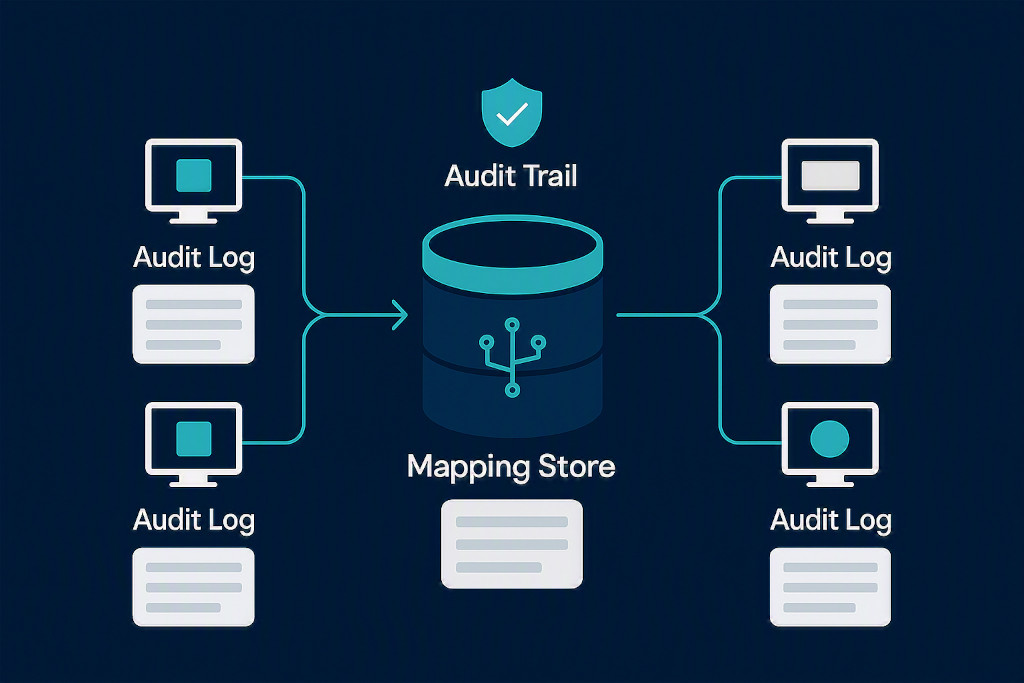
Once account mappings have been confirmed in BrizoConsol, they are stored as part of the group consolidation configuration and applied automatically to every subsequent consolidation run. Finance teams do not need to re-confirm mappings each month. The mapping layer is persistent, and confirmed mappings remain in place until they are deliberately changed by a member of the finance team with the appropriate access permissions. This means that the upfront effort invested in reviewing and confirming AI Auto-Map suggestions during initial setup pays off in every subsequent consolidation period, when the mapping is applied automatically without any additional manual work.
BrizoConsol also maintains a mapping history, recording when each account mapping was confirmed, by whom, and whether it has been updated since its original confirmation. This audit trail is useful when reviewing consolidated financial statements, as it allows finance teams to verify that account mappings have been applied correctly and to investigate any unexpected movements in the consolidated accounts that might relate to a recent mapping change. For groups subject to external audit, the ability to demonstrate a clear, documented, and maintained account mapping process is a meaningful advantage over groups that rely on undocumented mapping logic embedded in spreadsheets.
AI Auto-Map Alongside BrizoConsol’s Broader Account Mapping Tools
AI Auto-Map is one component of BrizoConsol’s account mapping functionality, which also includes the ability to create and manage the group chart of accounts directly within the platform, to apply different mapping rules to different reporting views, and to handle accounts that require special treatment in the consolidation, such as intercompany accounts that need to be identified and paired for elimination purposes. The AI suggestion engine is designed to work alongside these tools rather than in isolation. When a finance team has already built a group chart of accounts and configured the consolidation structure, AI Auto-Map uses that configuration as the target framework for its suggestions, ensuring that the suggested mappings align with the group’s specific reporting requirements rather than a generic default structure.
For accounting firms using BrizoConsol to manage consolidations across multiple client groups, AI Auto-Map is particularly valuable because the underlying model improves as it is applied across more entities and more chart of accounts structures. Account naming conventions that are common across the firm’s client base are recognised reliably from the first use. The review and confirmation process builds a body of confirmed mappings over time that makes subsequent mapping exercises faster and more accurate. Firms that invest in getting their initial mappings right within BrizoConsol find that the marginal effort required to add new entities and manage ongoing account changes decreases as their mapping history grows.
Getting the Most Out of AI Auto-Map
Finance teams that approach AI Auto-Map as a review tool rather than a replacement for human judgment get the best results from it. The feature is designed to handle the repetitive, pattern-matching component of account mapping automatically, while leaving the judgment calls to the people who understand the business. Accounts that are straightforward and common across most businesses, including revenue accounts, payroll accounts, standard operating expense categories, and the main balance sheet classifications, will typically receive high-confidence suggestions that can be confirmed quickly. Accounts that are specific to the group’s industry, that use internal naming conventions, or that represent unusual transactions will require more careful review. Finance teams that build a habit of prompt review whenever new accounts appear, rather than allowing unmapped accounts to accumulate, will find that AI Auto-Map keeps the mapping layer current with minimal ongoing effort.
The quality of the group chart of accounts also affects the quality of AI Auto-Map suggestions. A well-structured group chart of accounts with clear, descriptive account names gives the suggestion engine more to work with than a sparse or cryptically labelled structure. Groups that have invested time in building a clear group reporting framework find that AI Auto-Map suggestions are more accurate and require less manual adjustment than groups with an ambiguous or inconsistently labelled group structure. This is not a prerequisite for using the feature, but it is a factor worth considering when setting up the group consolidation structure for the first time.
Account mapping is foundational to group consolidation. It determines how every number in every entity’s trial balance is classified in the consolidated financial statements, and errors in the mapping layer flow directly into the consolidated output. BrizoConsol’s AI Auto-Map feature addresses the most time-consuming and error-prone part of this process by automating the initial mapping pass and keeping the mapping current as entity account structures evolve. For finance teams setting up a consolidation for the first time, or for accounting firms managing consolidations across multiple client groups, it represents a genuine and measurable improvement over the manual approach that most groups have relied on to date.