End Manual Errors in Consolidation
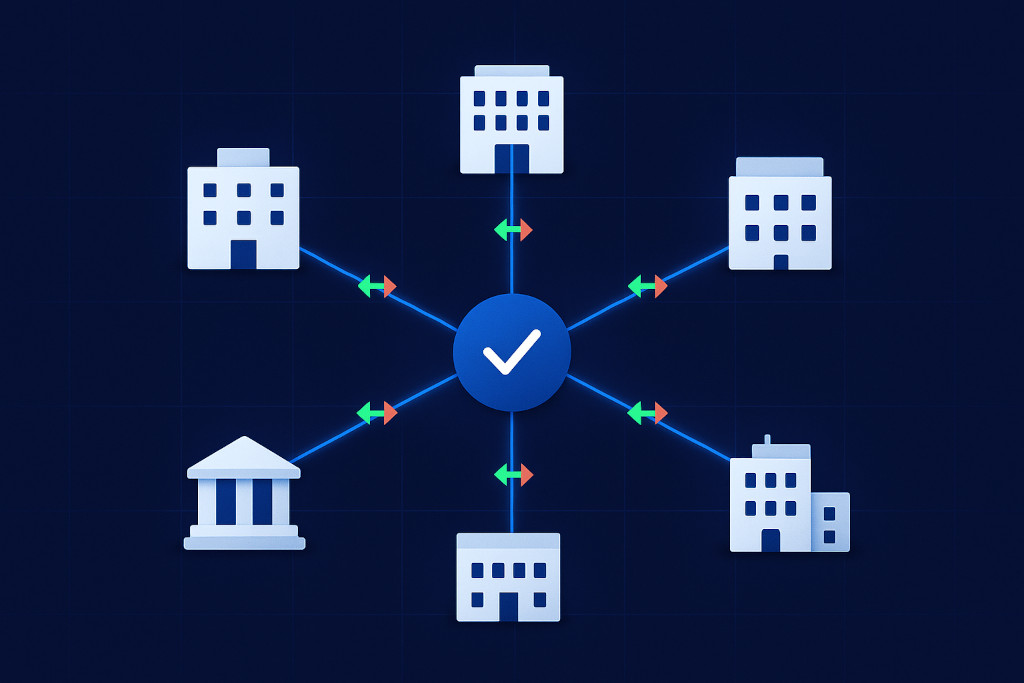
Every month, finance teams working with multi-entity groups face the same problem: the intercompany balances do not agree. Entity A has recorded an intercompany receivable of £142,500. Entity B has recorded the corresponding payable at £141,800. The £700 difference sits there, unresolved, until someone finds the time to investigate it. Meanwhile, the consolidated balance sheet is waiting, the board pack is overdue, and the accountant responsible is working backwards through three months of transactions in a spreadsheet that was never designed for this job.
This is not a competence problem. It is a tooling problem. Group consolidation — and intercompany elimination in particular — is genuinely complex, and the tools most finance teams rely on were not built for it. Purpose-built intercompany elimination software changes the equation entirely. This post explains what the elimination process actually requires, where manual approaches consistently fail, and how automation transforms a high-risk monthly exercise into a reliable, repeatable workflow.
Why Intercompany Eliminations Break Down in Practice

The theory of intercompany elimination is straightforward. When one group entity sells goods or services to another, both the revenue in the selling entity and the corresponding expense in the buying entity must be removed before the group consolidated P&L is presented. When one entity lends money to another, both the intercompany loan receivable and the intercompany loan payable must be cancelled out. Leaving these balances in place would mean that the group appears to have external revenues, expenses, assets, and liabilities that do not actually exist at a consolidated level.
Stop building consolidations in spreadsheets.
BrizoConsol automates multi-entity consolidation — setup in minutes, reports the same day.
In practice, three things routinely cause this process to fail in manual environments.
| Failure mode | What causes it | Impact on consolidated accounts |
|---|---|---|
| Timing differences | Entity A invoices in March; Entity B books the purchase in April — balances land in different periods | Intercompany receivable and payable do not agree; elimination cannot be posted cleanly |
| Currency translation mismatches | Each entity translates the intercompany balance at whichever exchange rate applies in its own ledger | Translated figures disagree even when the underlying transaction is correctly recorded on both sides |
| Volume and complexity | Six entities, multiple intercompany relationship types, dozens of monthly elimination entries tracked in a spreadsheet | Entries missed, reversals forgotten, errors compound period over period without anyone noticing |
Timing differences between entities
Entity A invoices Entity B on the 28th of the month. Entity B processes the purchase invoice in the following period. The intercompany receivable and payable land in different reporting periods, creating a mismatch that only becomes apparent when someone compares the two balances side by side — if that comparison is even made at all.
Currency translation mismatches
For groups with entities operating in different currencies, the intercompany balance on each side of a transaction will be translated into the group presentation currency at whatever exchange rate applies in each entity’s ledger. Unless the same rate is applied consistently, the translated figures will not agree even if the underlying transaction was correctly recorded on both sides.
Volume and complexity
A group with six entities and multiple intercompany relationships — management fees, shared service charges, intercompany loans, inventory transfers — may have dozens of elimination entries to prepare each month. Tracking all of these in a spreadsheet, ensuring nothing is missed, and verifying that every elimination is correctly reversed in the following period if required is extraordinarily difficult to do without errors.
A group with six entities and multiple intercompany relationships — management fees, shared service charges, intercompany loans, inventory transfers — may have dozens of elimination entries to prepare each month. Tracking all of these in a spreadsheet, ensuring nothing is missed, and verifying that every elimination is correctly reversed in the following period is extraordinarily difficult to do without errors. In a manual consolidation environment, intercompany eliminations are typically where the most time is lost and where the most errors are introduced — often without anyone realising until the audit.
Volume and complexity
Not all intercompany eliminations are the same type. Grouping them into two distinct categories helps clarify the scope of work — and why the volume grows so quickly as groups add entities.
Trading and operational eliminations cover transactions that flow through the P&L and working capital: management fees, intercompany sales of goods and services, shared service recharges, intercompany loan interest. Each of these creates both an income/asset in the selling or lending entity and a corresponding expense/liability in the receiving entity. Both sides must be eliminated before the consolidated accounts are presented. In an active group, these run every month.
Investment and equity eliminations arise from the ownership structure itself rather than from trading activity. When a parent acquires a subsidiary, the cost of that investment sits on the parent’s balance sheet as “Investment in Subsidiary.” The subsidiary’s own share capital and pre-acquisition retained earnings sit on its balance sheet. In the consolidated accounts, both must be cancelled against each other — because the group cannot own a portion of itself.
The difference between the cost of investment and the fair value of net assets acquired at the acquisition date is recognised as goodwill on the consolidated balance sheet, subject to annual impairment testing under IAS 36. Where net assets exceed cost, a bargain purchase gain is recognised immediately in consolidated P&L under IFRS 3. This elimination is posted once at acquisition and then carried forward as a standing consolidation adjustment in every subsequent period.
Two further complexities attach to investment eliminations that do not apply to trading eliminations:
- Pre- vs. post-acquisition earnings. Only post-acquisition retained earnings of the subsidiary flow through to group P&L. Pre-acquisition retained earnings are frozen at the acquisition date and form part of the goodwill calculation. Separating the two requires maintaining a clear acquisition-date reference point in the consolidation model.
- Partial ownership. Where the parent owns less than 100% of the subsidiary, the investment elimination must account for the non-controlling interest’s share — both in the net assets at acquisition and in post-acquisition profits. This is why NCI and intercompany elimination are not independent calculations: they are linked at the point of investment elimination.
Manual consolidation environments frequently handle trading eliminations with reasonable consistency while underestimating the investment elimination layer — particularly after an acquisition, when the goodwill calculation is first established and the carrying value must be tracked forward for impairment purposes. Purpose-built consolidation software handles both layers within the same workflow.
What Intercompany Elimination Software Actually Does
| Step | Manual approach | With purpose-built software |
|---|---|---|
| Data collection | Export trial balances from each system separately; reformat for comparison | Direct API connection — balances pulled automatically and held in a single environment |
| Balance matching | Side-by-side comparison in a spreadsheet; differences identified manually | Platform matches both sides of every intercompany relationship automatically; differences flagged immediately |
| Elimination posting | Manual journal entry constructed and posted for each elimination | Matched balances eliminated automatically; mismatches queued for investigation |
| Recurring transactions | Rebuilt from scratch each period — management fees, loan interest, recharges | Standing auto-elimination rules run each period without manual intervention |
| Audit trail | Reconstruction required — who posted what, when, why | Every elimination logged with user, timestamp, and basis — traceable on demand |
| Error discovery | Often not until review or audit — sometimes not until the following period | Flagged at the point of mismatch — before the consolidation is closed |
Purpose-built intercompany elimination software addresses all three failure modes above. Rather than asking the accountant to manually compare balances from two separate systems and construct elimination entries from scratch, the software brings both sides of every intercompany relationship into a single environment and performs the comparison automatically.
In a well-designed multi-entity accounting software platform, the elimination workflow typically works as follows. Each entity’s trial balance is imported or synchronised directly from the accounting system — no CSV exports, no copy-paste. The platform then identifies all account balances that have been flagged as intercompany in nature and presents them in a matched view: Entity A’s intercompany receivable alongside Entity B’s corresponding payable, with any difference immediately visible.
Where balances agree, the elimination can be posted automatically. Where they do not agree, the accountant is presented with a clear discrepancy report showing the quantum of the mismatch and the accounts involved, making investigation straightforward. Once resolved, the elimination is posted with a full audit trail showing who posted it, when, and on what basis.
For groups with recurring intercompany transactions — monthly management fees, regular intercompany loan interest — the software can be configured with standing elimination rules that automatically identify and eliminate those transaction patterns each period without manual setup. This is the equivalent of recurring journals applied to the elimination layer, and for groups with high volumes of regular intercompany activity, it dramatically reduces the manual effort required at each month-end.
How BrizoConsol Automates Intercompany Eliminations
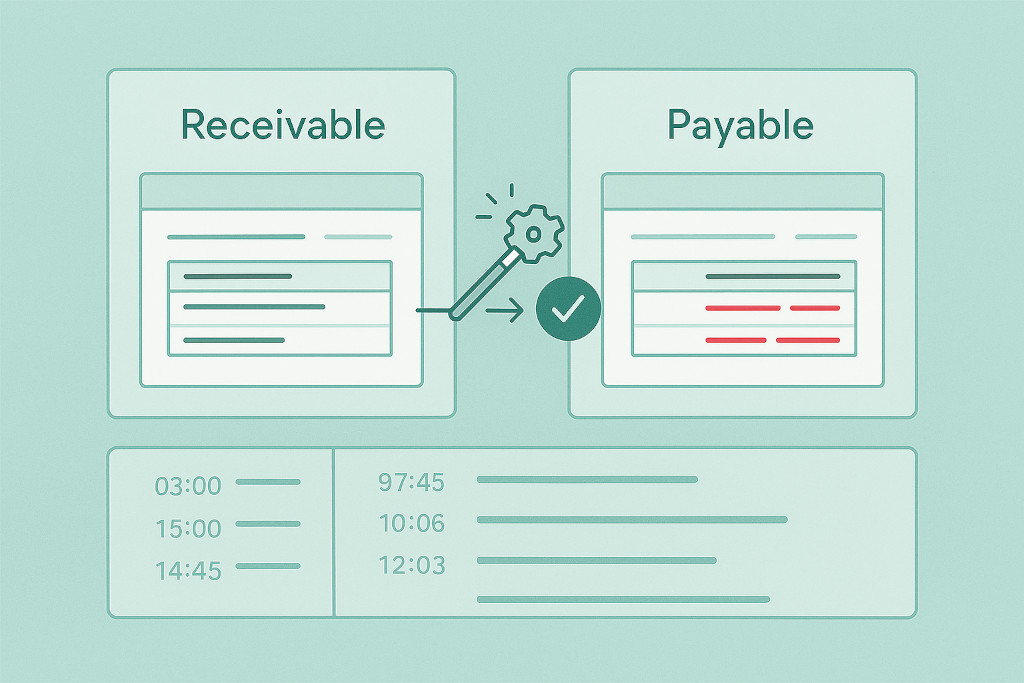
BrizoConsol’s intercompany elimination module is built directly into the group consolidation workflow. Because BrizoConsol connects directly to Xero, QuickBooks, MYOB, and Zoho Books via live API — rather than relying on exported files — the data from each entity is always current and consistent at the point of consolidation. There is no risk of working from a trial balance that was exported at a different time from another entity’s, which is one of the most common sources of timing-related mismatches in manual workflows.
When you run a consolidation in BrizoConsol, the platform automatically identifies intercompany balances across all entities in the group and presents them in the elimination workspace. Here is what that looks like in practice:
- Matched eliminations — where both sides of an intercompany transaction agree within tolerance, BrizoConsol can eliminate them automatically according to rules you configure. No manual journal entry required.
- Mismatched balances — where a discrepancy exists, BrizoConsol flags it clearly, showing the balance on each side and the quantum of the difference, so the accountant can investigate immediately rather than discovering the problem during review.
- Multi-currency eliminations — where intercompany transactions span entities in different functional currencies, BrizoConsol applies the correct exchange rate consistently and handles the resulting currency differences in the appropriate equity reserve, in line with IFRS and other supported accounting standards.
Key capability: BrizoConsol supports auto-elimination rules for recurring intercompany transactions. Once configured, these rules run automatically at each period close — identifying the matching balances, confirming they agree within the defined tolerance, and posting the eliminations without manual intervention. For groups with regular management fee structures or intercompany loan arrangements, this alone can save several hours per month-end cycle.
A Worked Example: Management Fee Elimination with a Currency Dimension
Abstract descriptions of intercompany elimination are easier to follow with a concrete example. The scenario below covers a common case — a monthly management fee between two entities — first in a single-currency group, then with a cross-currency dimension added.
Base case: single currency
ParentCo (GBP functional currency) charges SubCo (also GBP) a monthly management fee of £20,000 for group services.
In each entity’s ledger before consolidation:
| Entity | Debit | Credit |
|---|---|---|
| ParentCo | Intercompany Receivable £20,000 | Management Fee Income £20,000 |
| SubCo | Management Expenses £20,000 | Intercompany Payable £20,000 |
The elimination removes both the income and the expense from the consolidated P&L, and cancels the receivable and payable from the consolidated balance sheet:
| Elimination entry | Debit | Credit |
|---|---|---|
| P&L | Management Fee Income £20,000 | Management Expenses £20,000 |
| Balance sheet | Intercompany Payable £20,000 | Intercompany Receivable £20,000 |
After elimination: the consolidated P&L shows neither the income nor the expense, and the balance sheet contains neither the receivable nor the payable. The group’s net position is unaffected — because cash moving within the group does not create or destroy group wealth.
With a currency dimension
Now assume SubCo is a USD entity. ParentCo invoices in GBP (£20,000), and SubCo books the corresponding payable in USD, translating at the rate on the invoice date: USD 25,400 at 1.27.
At period end, the closing rate has moved to 1.25. SubCo retranslates its payable at the closing rate: USD 25,400 ÷ 1.25 = £20,320. ParentCo’s receivable remains at £20,000.
The intercompany balances now show a £320 difference — not because anything was incorrectly recorded, but because each entity has applied the rate applicable to it at the relevant date. This residual does not represent a real economic gain or loss. Under IAS 21, it is posted to the currency translation reserve in equity as part of the consolidation — not to P&L.
In a manual process, identifying this as a translation difference rather than a bookkeeping error, and posting it to the correct equity reserve rather than writing it off as a rounding adjustment, requires both technical knowledge and time. In BrizoConsol, the currency difference is calculated and posted to the translation reserve automatically as part of the elimination workflow.
The Hidden Cost of Doing Eliminations Manually
Finance leaders who have not yet adopted dedicated financial consolidation software sometimes underestimate what manual intercompany elimination actually costs. The direct time cost — the hours spent building and checking elimination journals in spreadsheets — is visible. The indirect costs are less obvious but often larger.
When eliminations are done manually, errors tend to compound. A missed elimination in one period creates an opening balance adjustment in the next. An incorrectly reversed elimination produces a ghost balance that persists for months before anyone notices. These compounding errors mean that the person responsible for the consolidation spends an increasing proportion of each month-end cycle reconciling prior period issues rather than producing current period insights.
There is also a risk dimension that is difficult to quantify until something goes wrong. Consolidated financial statements that contain uneliminated intercompany transactions will present an inaccurate picture of the group’s financial position. If those statements are shared with investors, lenders, or a board, the consequences of a material error can extend well beyond the time cost of correcting it.
Not all intercompany eliminations are straightforward two-sided journal entries. As groups grow in complexity, so do the elimination requirements.
| Scenario | What makes it complex | How BrizoConsol handles it |
|---|---|---|
| Unrealised profit in inventory | When one entity sells goods to another at a mark-up and the buying entity holds those goods at period end, the embedded profit must be eliminated — along with the inventory adjustment and related deferred tax | Unrealised profit elimination configured by entity and margin rate; inventory and tax adjustments calculated automatically |
| NCI in eliminations | For partially owned subsidiaries, elimination entries must be apportioned correctly between the group’s share and the NCI’s share — not simply posted at 100% | Full NCI support built in — elimination entries flow correctly through to the NCI calculation without manual apportionment |
| Intercompany dividends | Dividend payments from subsidiary to parent must be eliminated to avoid overstating investment income and equity distributions; where the subsidiary is partially owned, the split between group and NCI must also be correct | Dividend elimination handled within the NCI workflow — group share and NCI share both treated correctly |
| Goodwill and investment elimination | When a parent acquires a subsidiary, the cost of investment must be eliminated against the subsidiary’s net assets at acquisition date; the excess is goodwill, which must be carried forward and tested for impairment annually — a standing consolidation adjustment that persists indefinitely after the acquisition | Acquisition-date net assets locked in the consolidation configuration; goodwill carried forward automatically; impairment adjustments posted in the consolidation journal with full audit trail |
Each of these scenarios represents a layer of complexity that multiplies quickly as the number of entities grows. Multi-entity accounting software that handles them natively is not a luxury for complex groups — it is a practical necessity.
Building a Reliable Elimination Process for the Long Term
The most valuable shift that finance teams can make in their approach to intercompany eliminations is to stop treating them as a problem to be solved each month and start treating them as a process to be designed once and maintained consistently.
In BrizoConsol, this means setting up the elimination rules, tolerance thresholds, and standing auto-elimination patterns during the initial configuration of the group consolidation. Once in place, these settings persist across every reporting period. The accountant’s role shifts from constructing eliminations from scratch to reviewing what the system has done, investigating any flagged discrepancies, and posting the period’s consolidation with confidence that the elimination layer is complete and accurate.
This shift from construction to review is not just a time saving. It is a qualitative improvement in the reliability of the output. A process that depends on an individual remembering every intercompany relationship and every required elimination entry each month is inherently fragile. A process that runs systematically, flags exceptions, and maintains an auditable record is one that can be delegated, scaled, and relied upon — month after month, entity after entity, year after year.
For growing groups, that reliability is exactly what makes the difference between a finance function that keeps pace with the business and one that perpetually struggles to close the books.
Conclusion: From Monthly Problem to Reliable Process
The intercompany elimination problem is not going away as groups grow — it compounds. More entities mean more intercompany relationships. More currencies mean more translation differences. More complexity means more scenarios where a manual process fails silently and the error surfaces three months later under pressure.
The finance teams that have solved this problem have done so by treating elimination as a process to design once, not a problem to solve each month. Standing auto-elimination rules, automated mismatch detection, and a full audit trail on every entry are not advanced features for sophisticated groups. They are the baseline that makes monthly consolidation reliable rather than heroic.
For growing groups still managing eliminations in spreadsheets, the question is not whether the current process is good enough. It is whether it will still be good enough when the next entity is added — and the one after that.