The Accountant’s Guide to Group Reporting: How to Deliver Consolidated Financials Without the Manual Work

For accountants and finance managers supporting multi-entity clients or complex business groups, group reporting is one of the most time-consuming and error-prone tasks on the monthly calendar. Pulling trial balances from multiple accounting systems, mapping each entity to a common structure, eliminating intercompany transactions, adjusting for currency differences, and assembling everything into a single coherent set of financials can take days rather than hours.
And the moment a client updates a figure or an entity switches accounting platforms, the process often has to start again from scratch. This guide is written specifically for accountants who are ready to replace that manual cycle with a structured, repeatable, and largely automated approach.
The challenge is not that accountants lack skill. It is that traditional tools were never designed for this job. General ledger software is built to manage a single entity. Spreadsheets are flexible but fragile. And while enterprise consolidation platforms exist, they are typically priced and configured for large listed companies with dedicated finance technology teams.
Automate NCI calculations across all your entities.
BrizoConsol handles non-controlling interest automatically — no manual adjustments required.
Practices and finance functions supporting growing groups have historically fallen into a gap between tools that are too simple and tools that are too complex. BrizoConsol was built specifically to close that gap — offering accountants a structured consolidation and reporting environment that does not require a systems implementation or specialist training to operate effectively.
The Manual Process vs an Automated One
| Step | Manual approach | With BrizoConsol |
|---|---|---|
| Data collection | Export trial balances from each platform; reformat for import | Direct API connection — data pulls automatically each period |
| Account mapping | Rebuild or copy-edit the mapping spreadsheet each month | Configured once; AI-suggested; applied automatically on every import |
| Intercompany elimination | Manually identify, match, and post each elimination | Auto-elimination rules run each period; mismatches flagged for review |
| Currency translation | Manual rate lookup; separate translation worksheets per entity | Rates entered once per period; correct methodology applied automatically |
| Report assembly | Export to Excel or PDF; format manually; email to stakeholders | Insight Package generates and delivers reports automatically on schedule |
| Audit trail | Reconstruction required — who changed what, when, why | Every step logged — eliminations, rates, mappings — all traceable |
| Time per close | Days to weeks depending on group size | Hours — review and approval rather than preparation |
Understanding What Group Reporting Actually Requires
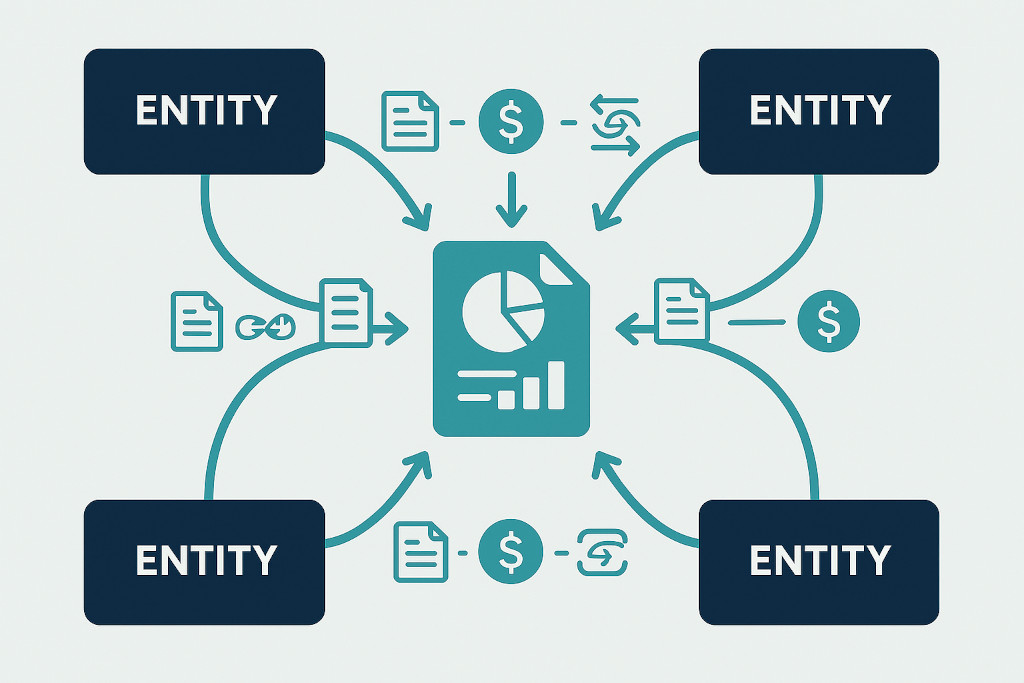
When you consolidate a group, you are not simply adding numbers together. You are combining the financial results of legally separate entities into a single view that reflects the economic reality of the group as a whole. That means:
- Removing intercompany transactions — any sale, loan, management fee, or dividend between group entities must be eliminated so the consolidated accounts show only transactions with the outside world
- Translating foreign currencies — each foreign entity’s financial statements must be translated into the group presentation currency using the correct rates for each account type
- Applying consistent accounting policies — entities using different local methods must be adjusted to a common group policy before their figures can be combined
- Gathering and cleaning entity data — trial balances from multiple platforms, in multiple formats, with varying levels of bookkeeping quality, must all be standardised before consolidation can begin
- Maintaining an audit trail — every adjustment, elimination, and translation must be documented so the consolidated figures can be traced and defended by auditors, lenders, and investors
Before any of that can happen, you need clean data from each entity in the group. In practice, this is often the hardest part. Entities may use different accounting platforms, different chart of accounts structures, different fiscal period definitions, and different levels of bookkeeping quality.
The accountant responsible for the group consolidation must gather all of this data, map it into a consistent structure, identify and correct errors, and only then begin the consolidation process itself. Without a purpose-built tool, each step requires manual effort and introduces the risk of errors that will need to be found and corrected downstream. BrizoConsol addresses this by providing a structured import and mapping layer that absorbs the inconsistencies between entities and presents a clean, consolidated foundation to work from.
Setting Up a Common Chart of Accounts
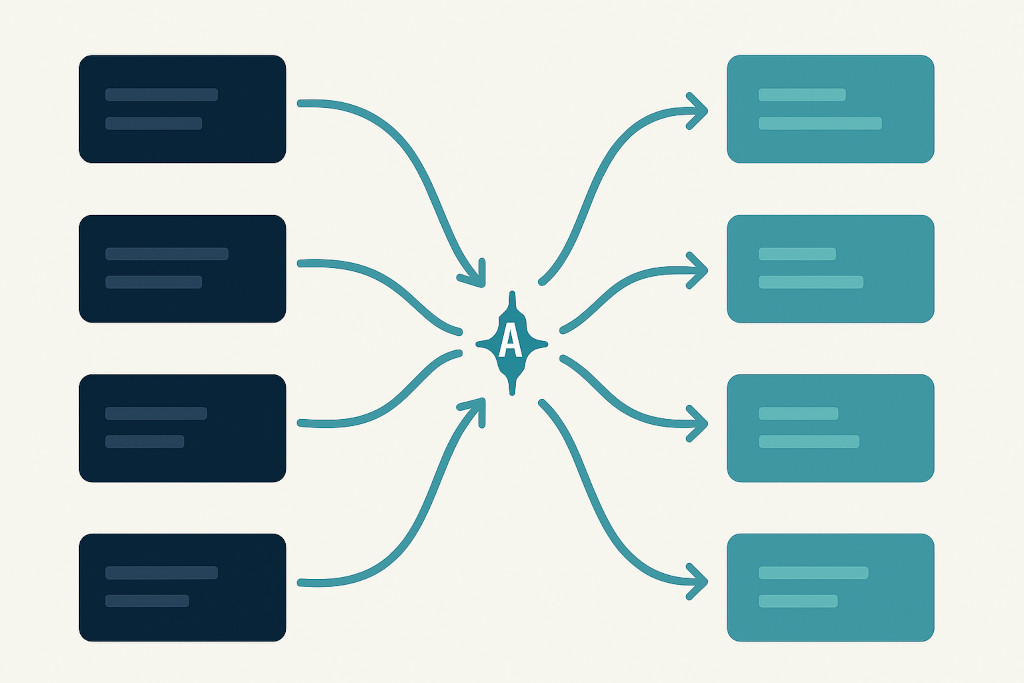
One of the most important decisions an accountant makes when setting up a group reporting structure is how to handle the chart of accounts. Each entity in the group may have its own local chart of accounts, shaped by its accounting platform, its industry, or the preferences of whoever set it up.
For consolidation purposes, these need to be mapped to a single common structure that allows the group financials to be presented coherently. This common chart of accounts does not replace the local charts used by individual entities — it sits above them as a reporting layer, and each local account is mapped to the appropriate common account so that the consolidation can aggregate balances correctly.
The AI Auto-Map process in BrizoConsol works in four steps:
- Import — trial balance data is pulled directly from the entity’s accounting platform via API
- Analyse — BrizoConsol reads account names, codes, and structures and suggests mappings to the group chart of accounts
- Review — the accountant confirms accurate suggestions and adjusts any that need correction
- Store — confirmed mappings are saved and applied automatically to every future import from that entity
BrizoConsol’s AI Auto-Map feature significantly reduces the time this step takes. When you import a trial balance from an entity, the system analyses the account names and structures and suggests mappings to the common chart of accounts automatically. An accountant reviews and confirms those suggestions rather than building the mapping manually from scratch.
For groups where entities share similar accounting platforms or business models, the AI-suggested mappings are highly accurate and the review process takes minutes rather than hours. For more complex or unusual account structures, the accountant retains full control to adjust mappings as needed, and those adjustments are remembered for future imports from the same entity.
Handling Intercompany Eliminations Correctly
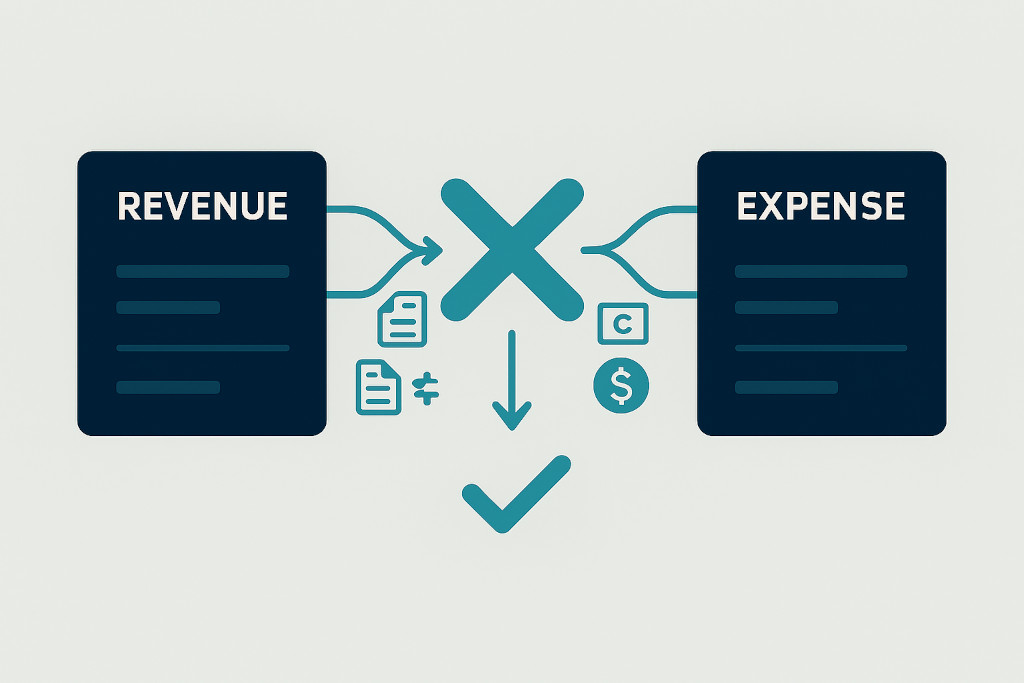
Intercompany eliminations are at the heart of the consolidation process, and they are also the area where manual approaches most commonly break down. When one entity sells goods or services to another, both the revenue and the corresponding expense must be removed. When one entity lends money to another, both the intercompany receivable and the payable must be eliminated. When one entity pays a management fee to a parent, both the charge and the income must cancel out.
If these eliminations are not performed, the group financials will overstate both revenue and costs, and the balance sheet will show assets and liabilities that do not exist at a group level.
The four elimination types that apply in most groups:
| Transaction type | What gets eliminated | Impact if missed |
|---|---|---|
| Intercompany sales | Seller’s revenue + buyer’s cost of sales | Group revenue and costs both overstated |
| Intercompany loans | Lender’s receivable + borrower’s payable; interest income + expense | Balance sheet inflated; finance income and expense both overstated |
| Management fees | Parent’s fee income + subsidiary’s fee expense | Revenue and costs both overstated |
| Intercompany dividends | Parent’s dividend income + subsidiary’s retained earnings reduction | Group profit overstated; equity misstated |
In practice, intercompany eliminations require accurate data from both sides of each transaction — and the two sides are rarely in perfect agreement. Timing differences, currency translation differences, and simple bookkeeping errors mean that intercompany balances frequently do not match exactly.
BrizoConsol provides an intercompany elimination module that brings both sides of each transaction together, highlights mismatches, and allows the accountant to investigate and resolve them before the elimination is posted. For groups with regular, predictable intercompany transactions, auto-elimination rules identify and eliminate recurring transaction patterns without manual intervention each month — transforming a process that might previously have taken an afternoon into one that takes minutes, with a clear audit trail showing exactly what was eliminated and why.
Managing Foreign Currency in a Multi-Currency Group
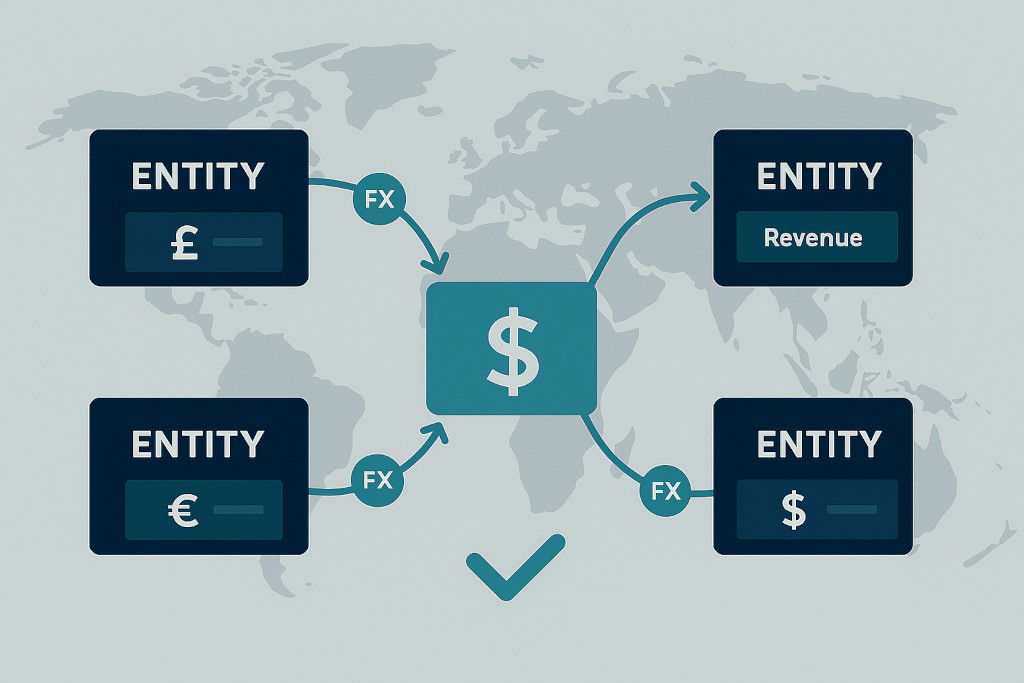
For groups with entities operating in different currencies, the consolidation process must also handle the translation of foreign currency balances into the group presentation currency. The rules are well established under both IFRS and local GAAP frameworks:
| Account type | Rate applied | Notes |
|---|---|---|
| Assets and liabilities | Closing rate (period-end spot rate) | Retranslated every period |
| Income and expenses | Average rate for the period | Practical approximation of transaction-date rates |
| Equity items | Historical rate | Rate at the date equity was originally recognised |
| CTA (balancing figure) | Calculated | Accumulated in a separate equity reserve — not through P&L |
Managing all of this correctly in a spreadsheet environment requires careful construction and maintenance of currency translation worksheets, and errors are easy to introduce and hard to detect.
BrizoConsol handles multi-currency translation automatically once the entity’s functional currency and the group’s presentation currency are defined. Exchange rates are entered once per period and applied correctly to each balance type. The cumulative translation adjustment is calculated and presented as part of the equity reconciliation without any manual workings.
For accountants supporting international groups, this alone represents a substantial reduction in both the time required and the risk of error. The result is a set of consolidated financials that correctly reflects the currency composition of the group and provides a clear, auditable record of how foreign currency movements have been handled.
Delivering Reports to Clients and Stakeholders
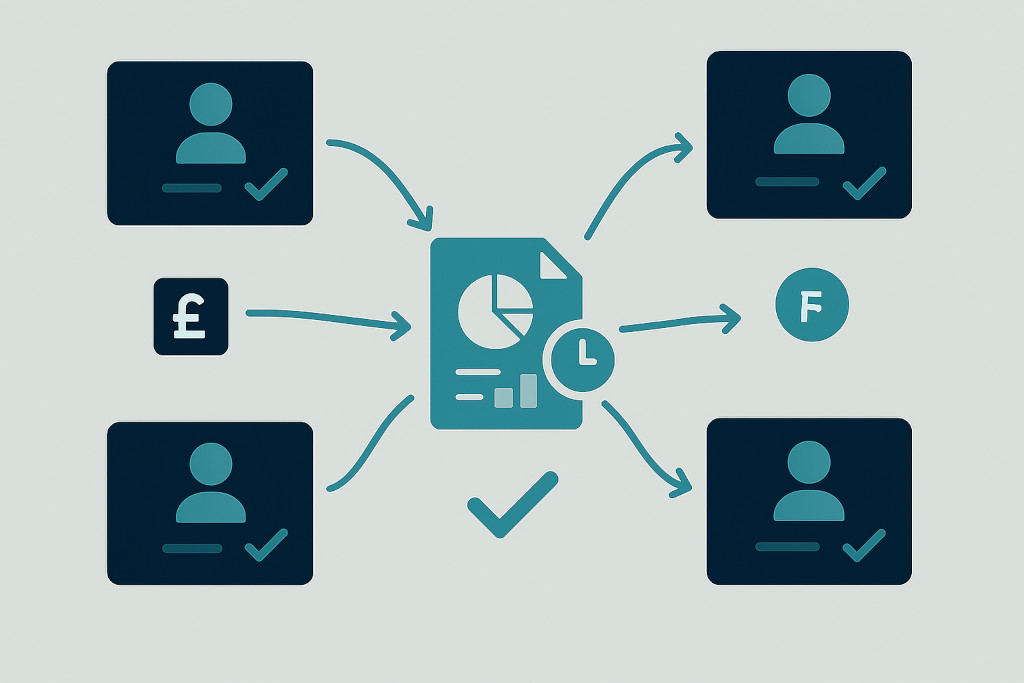
Producing the consolidated financials is only part of the job. The output needs to reach the right people in the right format at the right time. For accounting practices, this typically means delivering a set of management accounts or board pack to the client on a monthly or quarterly basis. For in-house finance functions, it means distributing reports to divisional managers, board members, investors, and other stakeholders who may need different levels of detail and different cuts of the data.
In a manual environment, this distribution step is typically performed by exporting spreadsheets or PDFs and sending them by email — often with version control problems and no way to verify that recipients are looking at the most current figures.
The Insight Package workflow replaces that manual cycle with a configured-once, runs-automatically process:
- Configure — define which reports the package contains, which entities and periods it covers, and which recipients receive it
- Schedule — set the delivery cadence: monthly, quarterly, or on demand
- Auto-generate — at each reporting cycle, BrizoConsol pulls the latest consolidated data and generates the report set automatically
- Auto-deliver — reports are sent to the defined recipients without any manual intervention
For practices managing multiple clients, all client packages run in parallel — not in sequence.
BrizoConsol’s Insight Package feature addresses this directly. An Insight Package is a defined set of reports and dashboards that is assembled once and then delivered automatically on a scheduled basis. The accountant configures the package once — defining which reports it contains, which entities and periods it covers, and which recipients should receive it. After that, the package runs automatically at each reporting cycle, generating a fresh set of outputs from the latest consolidated data and delivering them without any manual intervention.
For practices managing multiple clients, this means the month-end report delivery process can run in parallel across all clients simultaneously rather than requiring the accountant to manually produce and send each client’s reports in sequence. The time saving across a portfolio of multi-entity clients can be substantial, and the consistency and reliability of the output improves at the same time.
Making Group Reporting a Repeatable Process
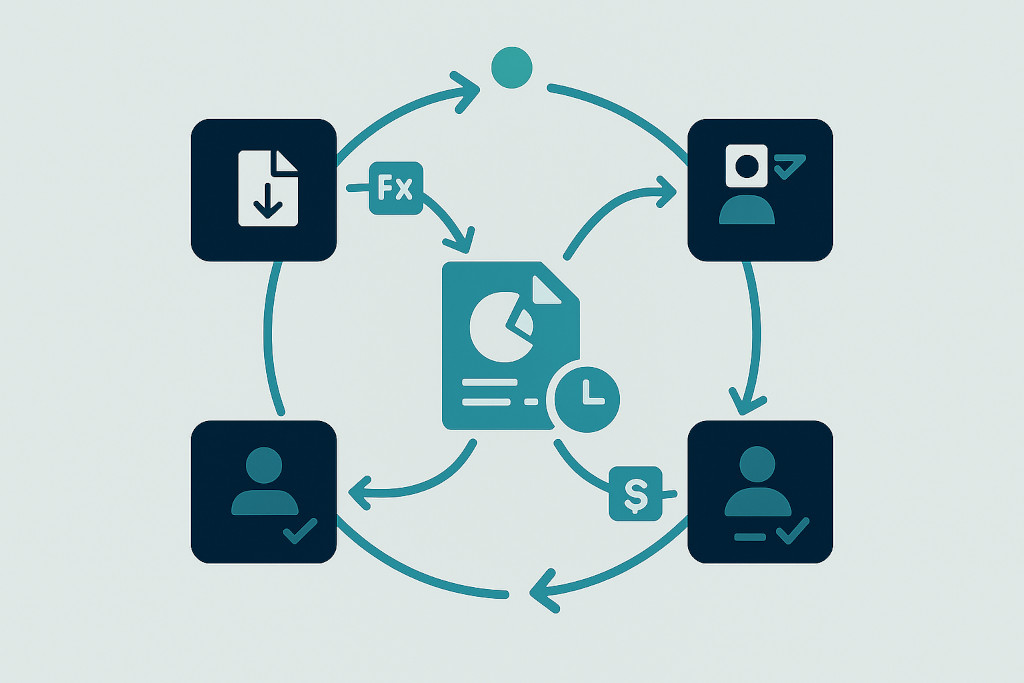
The most important shift that accountants can make in their approach to group reporting is to treat it as a process rather than a project. When consolidation is done manually, it tends to be approached fresh each month — the same steps in roughly the same order, but without a formal structure that ensures consistency and completeness. Quality depends heavily on the individual doing the work, and it is difficult to delegate or scale.
When consolidation is built on a structured platform like BrizoConsol, the process becomes defined and repeatable. The entity setup, the chart of accounts mappings, the intercompany elimination rules, the currency settings, and the report templates are all configured once and applied consistently each period.
| Benefit | What it means in practice |
|---|---|
| Easier to delegate | A newer team member follows a defined workflow — the knowledge lives in the platform, not in one person’s head |
| Easier to audit | Every elimination, rate, and mapping is logged — auditors trace any figure to its source without reconstruction |
| Scalable | Adding a new entity or client means extending an existing framework, not building a new model from scratch |
For accountants who are serious about building a group reporting service that can grow with their clients, a purpose-built consolidation platform is not a luxury. It is the foundation that makes the service sustainable and reliable over time.
Conclusion: Build the Process Once, Deliver It Every Month
Group reporting done well is not a monthly heroic effort — it is a well-designed process that runs reliably with minimal friction each period. The accountants who deliver the most value to their multi-entity clients are not the ones who work the hardest at month-end. They are the ones who have invested in building a process that does not depend on heroics.
That means a structured chart of accounts mapping maintained in one place, intercompany elimination rules that run automatically, currency translation that applies the correct rates without manual worksheets, and report delivery that reaches the right people at the right time without manual intervention.
BrizoConsol provides that infrastructure — for accounting practices managing multiple client groups, and for in-house finance teams managing complex multi-entity structures. If you are still building consolidations manually each month, the question is not whether to change the process. It is when.