Financial Consolidation Software: What It Does and Why Your Group Needs It
Most finance leaders running a multi-entity group reach the same breaking point at roughly the same moment: when the spreadsheet that used to take two days to produce starts taking five, and the person who built it is the only one who understands it. That spreadsheet is doing the job of financial consolidation software — just badly, slowly, and at significant risk. This post explains what financial consolidation software actually does, why it exists, and what to look for when you decide it is time to replace the spreadsheet.
The Problem Financial Consolidation Software Solves
When a business operates as a group — whether that means two subsidiaries or twenty — the finance function faces a challenge that single-entity accounting software is not built to handle. Each entity has its own chart of accounts, its own accounting platform, its own currency (sometimes), and its own closing cycle. Producing a set of group-level financial statements requires collecting all of that data, mapping it to a consistent structure, removing the effects of transactions between entities, handling any currency translation, and assembling the result into a coherent consolidated P&L, balance sheet, and cash flow statement.
Done manually, this process is labour-intensive, error-prone, and difficult to audit. A single missed intercompany transaction or an incorrectly applied exchange rate can produce a consolidated balance sheet that does not balance, or a revenue figure that overstates the group’s actual performance. The larger the group, the more relationships there are to track, and the more opportunities there are for errors to compound silently through the consolidation. Financial consolidation software exists to automate and systematise this process, replacing a chain of manual steps with a structured, repeatable workflow that produces reliable results each reporting period.
Automate NCI calculations across all your entities.
BrizoConsol handles non-controlling interest automatically — no manual adjustments required.
What Financial Consolidation Software Actually Does
The term “financial consolidation software” covers a specific set of capabilities that distinguish it from general accounting software or reporting tools. Understanding these capabilities is important when evaluating options, because not every tool marketed as a consolidation solution actually delivers all of them.
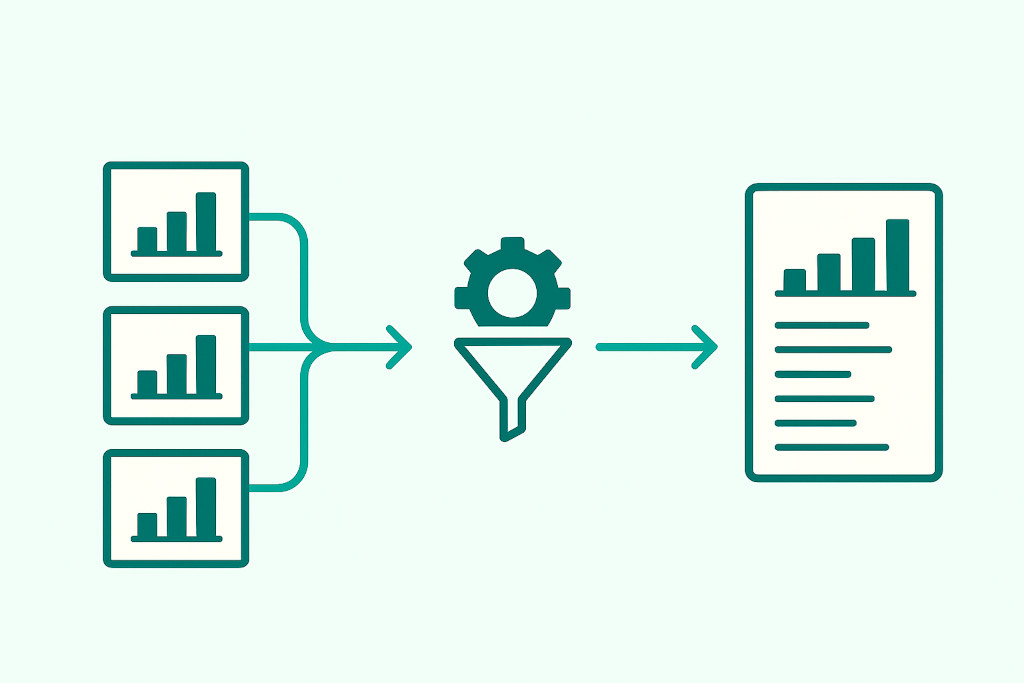
Financial consolidation software delivers four core capabilities that manual spreadsheet processes cannot replicate reliably at scale:
| Capability | What it does |
|---|---|
| Data collection and mapping | Connects directly to each entity’s accounting platform via API; maps local account codes to a group chart of accounts automatically |
| Intercompany elimination | Identifies and removes all intragroup transactions — sales, loans, management fees, dividends — from the consolidated P&L and balance sheet |
| Multi-currency translation | Translates foreign entity statements at closing and average rates; calculates and posts the CTA to group equity automatically |
| Consolidated financial statements | Produces group P&L, balance sheet, and cash flow on demand — by entity, by region, or across the full group |
Data Collection and Mapping
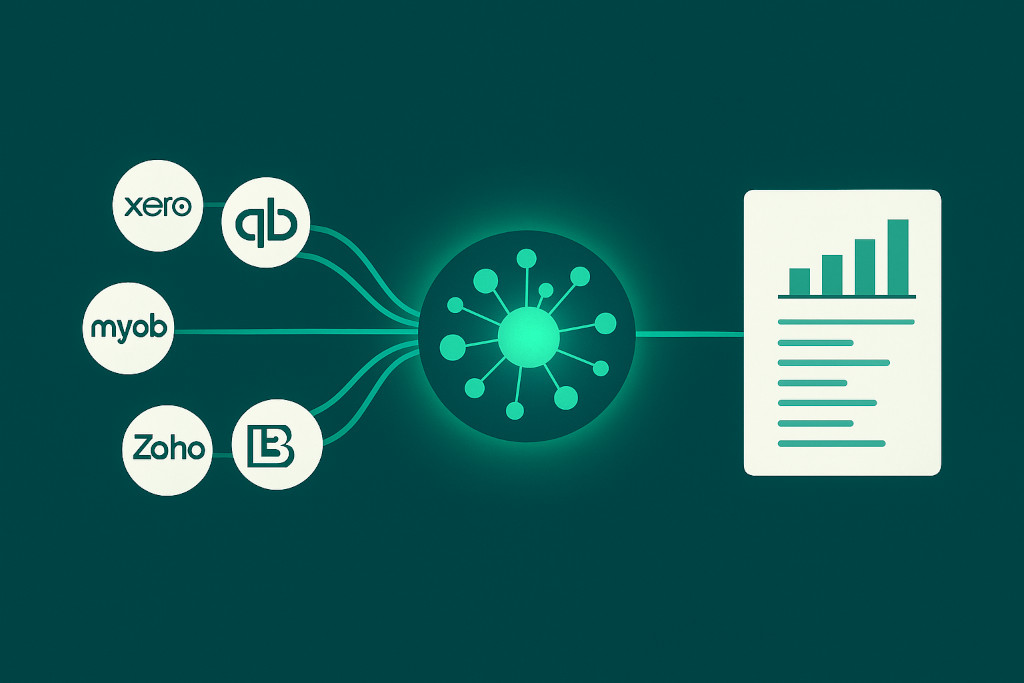
The consolidation process starts with collecting trial balance data from each entity in the group. Purpose-built financial consolidation software connects directly to the accounting platforms that entities use — in BrizoConsol’s case, that means live API connections to Xero, QuickBooks, MYOB, and Zoho Books, with no CSV exports required. This is a meaningful distinction. Manual CSV exports introduce lag, version risk, and the possibility of human error at the point of import. A direct API connection means the data in the consolidation environment is always current and complete.
Once data is collected, it must be mapped to a common chart of accounts so that balances from different entities can be combined meaningfully. Multi-entity accounting software with a strong mapping layer — including AI-assisted mapping, as BrizoConsol provides through its Auto-Map feature — dramatically reduces the time this step takes, particularly for groups where entities run different chart of accounts structures.
Intercompany Elimination
Intercompany eliminations are the technical heart of the consolidation process. When one entity sells to another, lends money to another, or pays a management fee to another, both sides of that transaction must be removed from the consolidated financials. Financial consolidation software handles this by maintaining an intercompany register, matching transactions between entities, and applying elimination entries automatically. For groups with regular recurring intercompany flows, configurable auto-elimination rules mean this process runs with minimal manual intervention month after month.
Multi-Currency Translation
For groups with entities in different currency jurisdictions, the consolidation must also translate foreign currency balances into the group’s presentation currency. This is technically demanding: assets and liabilities translate at closing rates, income and expenses at average rates, and equity at historical rates — with the resulting difference accumulated in a cumulative translation adjustment (CTA) reserve in equity.
Financial consolidation software handles all of this automatically once the functional currency and exchange rates are configured. The CTA is calculated and posted to the correct equity reserve each period, with a full history of period-by-period movements that auditors and investors can review.
This produces a correctly translated consolidated balance sheet without the manual workings that this process would otherwise require — and eliminates one of the most common sources of error in multi-entity group reporting.
Consolidated Financial Statements
The output of the consolidation process is a set of consolidated financial statements: a group P&L, a consolidated balance sheet, and a cash flow statement. These should be available on demand, not produced through a separate manual assembly step. Quality multi-entity accounting software produces these statements directly from the consolidation data, with the flexibility to present them by entity, by region, or across the group as a whole — and to recalculate them instantly when underlying figures change.
Who Needs Financial Consolidation Software
The honest answer is: any finance team managing more than one legal entity that trades with, lends to, or charges fees to another entity in the same group.
In practice, the need for proper group consolidation software appears earlier than most finance teams expect. A group of three entities with regular intercompany transactions can already be generating significant manual consolidation work each month. By the time a group reaches five or six entities, the manual approach typically becomes unsustainable without either large amounts of overtime or an acceptance of increased error risk.
The organisations that benefit most from dedicated financial consolidation software include:
- Growing SMEs that have structured their businesses across multiple legal entities for tax, liability, or operational reasons
- Private equity-backed groups managing a portfolio of subsidiary businesses under a common holding structure
- Accounting practices and outsourced CFO firms that manage consolidation for multiple client groups and need a scalable, efficient approach
- International groups with entities in different currency jurisdictions requiring multi-currency translation in their consolidated accounts
- Groups preparing for external reporting, audit, or a capital raise, where the quality and auditability of the consolidated financials will be scrutinised closely
How to Evaluate Financial Consolidation Software

The market for consolidation and multi-entity accounting software spans a wide range, from enterprise platforms built for listed companies with dedicated technology teams to lightweight tools that handle only the most basic aspects of the process. For mid-market groups and the accountants who support them, the right tool sits between those extremes: genuinely capable consolidation functionality, without the implementation complexity and cost of enterprise systems.
When evaluating options, the following criteria are worth examining carefully:
When evaluating consolidation software, these are the criteria that separate purpose-built tools from accounting platforms with basic reporting bolt-ons:
| Criteria | What to check |
|---|---|
| Direct integrations | API connections to Xero, QuickBooks, MYOB, Zoho Books — no CSV exports required |
| Intercompany elimination | Dedicated elimination module with intercompany register, mismatch detection, and full audit trail |
| Multi-currency support | Correct IAS 21 / ASC 830 translation methodology with CTA calculation — not manual adjustment |
| Accounting standards compliance | IFRS, US GAAP, UK GAAP, and local GAAP tagging; NCI calculations under IFRS 10 |
| Audit trail | Timestamped record of every elimination, journal, and currency adjustment — who posted it and when |
| Scalability and ease of use | Configurable by the finance team; new entities added without rebuilding the model |
The sections below cover each criterion in detail.
Direct Integrations with Your Accounting Platforms
The consolidation tool should connect via API to the accounting platforms your entities actually use — not require CSV exports or manual data entry. Check which platforms are supported natively and whether the connection is bidirectional or read-only. Direct integrations eliminate the data lag and version risk that come with manual data transfer and are a prerequisite for a reliable, repeatable consolidation process.
Intercompany Elimination Capability
Not all tools that describe themselves as financial consolidation software handle intercompany eliminations properly. Look for a dedicated elimination module that maintains an intercompany register, identifies mismatches between entities, and supports both automatic and manual elimination entries. The tool should also provide a clear audit trail of every elimination posted.
Multi-Currency Support
If any of your entities operate in a different currency to the group’s presentation currency, confirm that the software handles multi-currency translation correctly — including the CTA calculation — rather than requiring manual adjustments. This is a significant differentiator between tools built for international groups and those designed primarily for single-currency environments.
Accounting Standards Compliance
For groups that report under IFRS, US GAAP, UK GAAP, or local GAAP frameworks, the consolidation software should support the accounting treatment required by the relevant standard. BrizoConsol supports tagging and treatment under all major frameworks, including non-controlling interest (NCI) calculations under IFRS 10.
Audit Trail and Governance
Every adjustment made in the consolidation environment — whether an intercompany elimination, a manual journal, or a currency adjustment — should carry a timestamped record of what was posted and by whom. This audit trail is not just good governance; it is a practical requirement for any group that undergoes external audit or that needs to explain its consolidated numbers to investors or lenders.
Scalability and Ease of Use
The right financial consolidation software should be usable by a competent finance professional without a specialist implementation project. If the setup requires months of configuration by an external consultant, it is probably built for a larger organisation than yours. Look for tools that can be configured by the finance team, that add new entities without rebuilding the consolidation model, and that produce results quickly enough to support monthly rather than only annual reporting.
Conclusion: When to Make the Switch
The decision to move from manual spreadsheet consolidation to purpose-built financial consolidation software is often delayed by inertia rather than cost. The spreadsheet works — just about — and rebuilding the process feels like a significant project. In practice, the migration to a structured consolidation platform is typically faster than finance teams expect, particularly when the software includes AI-assisted chart of accounts mapping that accelerates the initial entity setup.
The more relevant question is not whether to make the switch, but when. Groups that make the transition earlier — before the manual process becomes genuinely unmanageable — get the benefit of a reliable, scalable consolidation process at the point when the business is growing fastest and when the quality of the group financials matters most to external stakeholders.
Waiting until the spreadsheet is broken means making the transition under pressure, with less time and less tolerance for a learning curve. Financial consolidation software is not a luxury for large organisations. For any growing multi-entity group that wants reliable, auditable, monthly consolidated accounts, it is the foundation that makes that standard of reporting achievable without an unsustainable investment of manual effort.