Intercompany Eliminations: A Practical Guide for Multi-Entity Groups
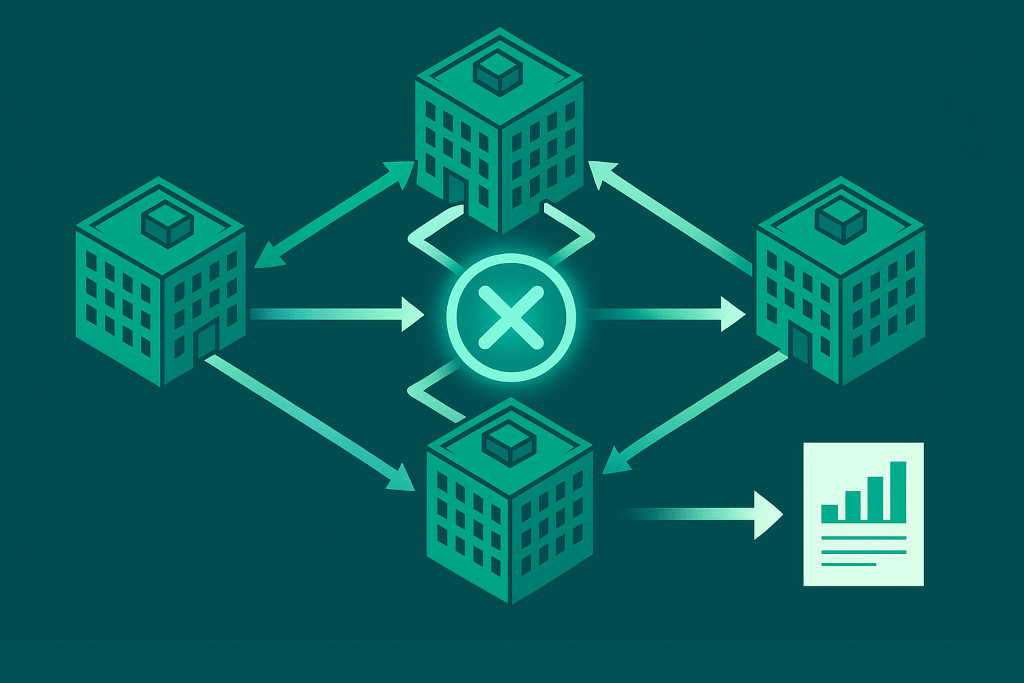
Intercompany eliminations are not complicated in principle. If one entity in your group sells goods to another, that sale did not happen from the group’s perspective — it is an internal transfer, and both the revenue in one entity and the corresponding cost in the other must be removed before the consolidated accounts reflect economic reality.
In practice, however, getting eliminations right across a group with multiple entities, multiple transaction types, and sometimes multiple currencies is one of the most technically demanding parts of the consolidation process. This guide walks through each type of intercompany transaction, explains the elimination treatment required, and covers how multi-entity accounting software makes the process reliable and repeatable.
Why Intercompany Eliminations Matter
Before examining the mechanics, it is worth being clear about why eliminations are non-negotiable. When consolidated financial statements are prepared, the group is presented as a single economic unit. Transactions between entities within that unit are internal flows — they do not represent economic activity with the outside world and should not affect the group’s reported revenue, costs, assets, or liabilities.
Intercompany eliminations without the manual work.
BrizoConsol identifies and eliminates intercompany balances automatically at consolidation.
If intercompany transactions are not eliminated, the consequences are material. Revenue will be overstated by the amount of internal sales. Costs will be similarly inflated. Intercompany loans will appear as both an asset (the receivable in the lending entity) and a liability (the payable in the borrowing entity), inflating the group balance sheet. Management fees will create phantom income and phantom expense within the group. None of these balances exist at a group level, and presenting them as though they do produces financial statements that misrepresent the group’s true position.
This is why every recognised accounting framework — IFRS 10, US GAAP ASC 810, UK GAAP FRS 102 — requires full elimination of intercompany balances and transactions on consolidation. It is not optional, and it is not a detail that can be approximated.
In any group using multi-entity accounting software, the elimination process needs to be thorough, auditable, and consistent period to period. A missed elimination does not just produce incorrect numbers — it produces numbers that cannot be explained or defended when auditors, lenders, or investors scrutinise the consolidation workings.
The Four Types of Intercompany Transactions to Eliminate
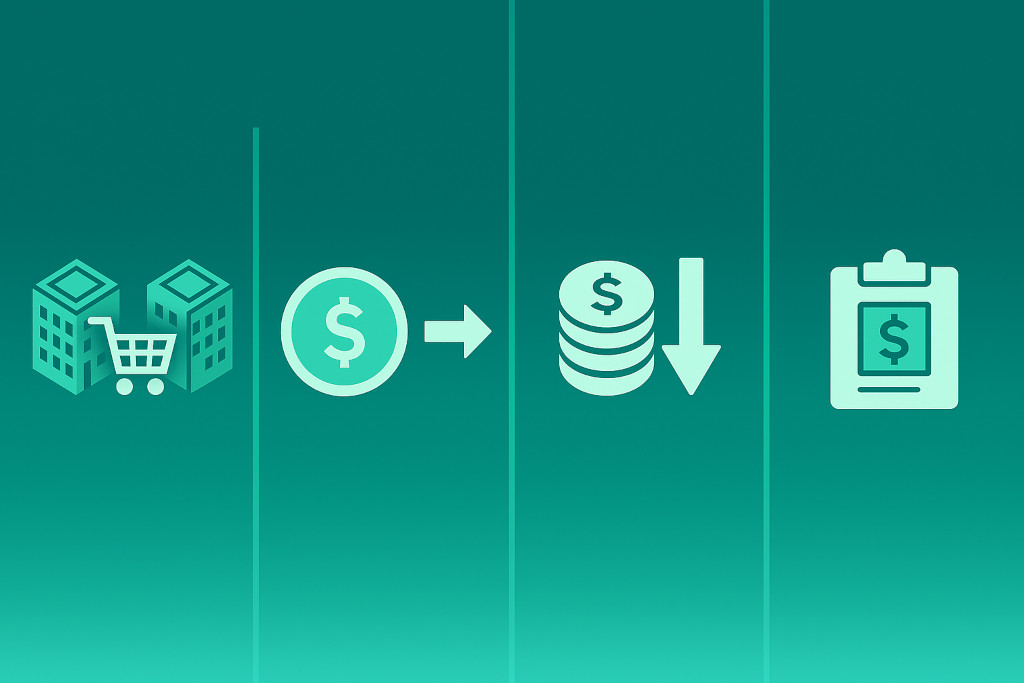
Most intercompany transactions fall into one of four categories, each of which requires a specific elimination treatment.
| Transaction type | What gets eliminated | P&L impact | Balance sheet impact |
|---|---|---|---|
| Intercompany trading | Selling entity’s revenue ↔ buying entity’s cost | Both revenue and cost reduce equally | Intercompany receivable ↔ payable; unrealised profit stripped from inventory if goods unsold |
| Intercompany loans | Interest income ↔ interest expense | Both finance income and expense reduce | Loan receivable ↔ loan payable |
| Management fees | Fee income ↔ fee expense | Both revenue and cost reduce equally | Fee receivable ↔ fee payable (if accrued) |
| Intercompany dividends | Dividend income ↔ dividends declared | Parent’s investment income removed | Dividend receivable ↔ dividend payable (if unpaid); subsidiary’s retained earnings restored |
The sections below cover the elimination treatment for each type in detail.
1. Intercompany Trading Transactions
When one entity sells goods or services to another entity in the group, both the revenue in the selling entity and the corresponding cost in the buying entity must be eliminated. This applies to sales of inventory, services, licences, or any other commercial transaction between group members.
The elimination entry removes the intercompany revenue from the consolidated P&L and removes the corresponding intercompany cost. The group profit is unaffected — but both the revenue and cost lines correctly reflect only transactions with third parties.
Example: Entity A sells $200,000 of services to Entity B.
| Dr | Cr | |
|---|---|---|
| Intercompany Revenue (Entity A) | $200,000 | |
| Intercompany Cost (Entity B) | $200,000 |
If Entity B has not yet sold the goods on to a third party, an additional unrealised profit adjustment is required — the inventory should be valued at the original cost to the group, not at the transfer price. This step is frequently omitted in manual consolidations.
In practice, complications arise when the selling entity invoices in one currency and the buying entity records in another, creating a translation difference that must be handled as part of the elimination.
2. Intercompany Loans and Financing
Intercompany loans are among the most common intercompany balances in multi-entity groups, particularly where a central treasury or holding company manages funding across the group. The elimination removes both the intercompany receivable from the balance sheet of the lending entity and the corresponding intercompany payable from the borrowing entity’s balance sheet.
Similarly, interest income recognised by the lending entity and interest expense recorded by the borrowing entity must both be eliminated from the consolidated P&L.
Example: Holdco has lent $500,000 to SubCo. $30,000 of interest has accrued during the year.
| Dr | Cr | |
|---|---|---|
| Intercompany Loan Payable (SubCo) | $500,000 | |
| Intercompany Loan Receivable (Holdco) | $500,000 | |
| Interest Income (Holdco) | $30,000 | |
| Interest Expense (SubCo) | $30,000 |
Currency mismatches are particularly common in loan eliminations, because both entities may be translating the same loan balance at slightly different rates on the reporting date. Purpose-built consolidation software handles this through a specific currency elimination adjustment rather than requiring a manual workaround.
3. Management Fees and Recharges
Many groups structure their operations so that a central holding company or shared services entity charges management fees to operating subsidiaries. These fees are a legitimate mechanism for allocating group costs across entities. For consolidation purposes, however, both the fee income in the charging entity and the fee expense in the paying entity must be eliminated.
Example: Holdco charges each of three subsidiaries a $5,000 monthly management fee. Annual total: $180,000.
| Dr | Cr | |
|---|---|---|
| Management Fee Income (Holdco) | $180,000 | |
| Management Fee Expense (Subsidiaries) | $180,000 |
Management fees are often recurring and predictable in amount, which makes them a strong candidate for auto-elimination rules in group consolidation software. Once the relationship between the charging entity and the recipient entities is configured, the elimination runs automatically each period without manual intervention.
4. Intercompany Dividends
When a subsidiary pays a dividend to its parent, the parent records dividend income in its individual accounts and the subsidiary reduces its retained earnings. In the consolidated accounts, this internal distribution must be eliminated — the dividend income in the parent’s P&L is removed, and the reduction in the subsidiary’s equity is reversed so that the group’s retained earnings are not understated.
Example: SubCo declares and pays a $100,000 dividend to Holdco (100% owner).
| Dr | Cr | |
|---|---|---|
| Dividend Income (Holdco) | $100,000 | |
| Dividends Declared — Retained Earnings (SubCo) | $100,000 |
Dividend eliminations are often overlooked in less rigorous consolidation processes because dividends do not appear as trading transactions in the same way as sales or management fees. In a properly maintained group consolidation, they represent a material intercompany flow that must be captured and eliminated every time a subsidiary distributes profits to its parent.
How Multi-Entity Accounting Software Handles Eliminations
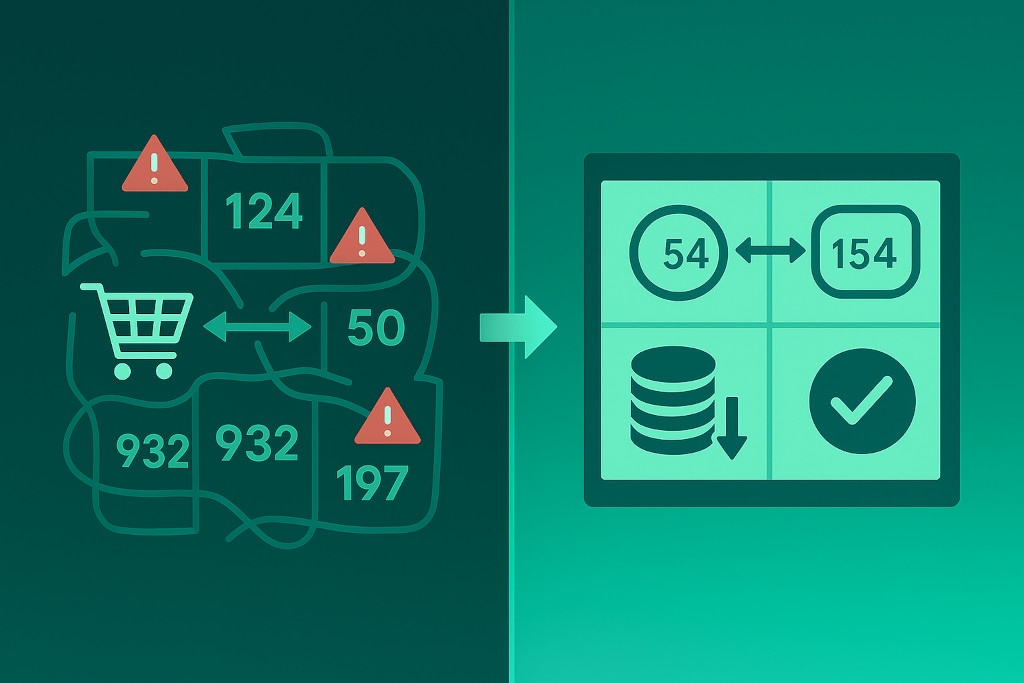
The fundamental challenge with intercompany eliminations is not understanding what needs to be done — it is doing it accurately, consistently, and at speed, across every entity and every transaction type, each reporting period.
This is where multi-entity accounting software makes a transformative difference. Rather than an accountant manually hunting for intercompany balances across multiple trial balances each month, purpose-built consolidation software identifies them automatically, matches both sides, and presents them for review and elimination — all within a structured, auditable workflow.
Purpose-built consolidation software handles each part of the elimination workflow through a structured, automated layer that replaces the manual steps most finance teams currently manage in spreadsheets.
| Capability | What it does | Why it matters |
|---|---|---|
| Intercompany register | Maintains a structured record of every intercompany relationship — entity pairs, transaction types, and account codes on each side | Eliminates manual hunting for intercompany balances each month; the software identifies them automatically as data flows in |
| Auto-elimination rules | Configurable rules for recurring transactions — monthly management fees, standing loans, regular recharges — applied automatically each period | Compresses what was previously an afternoon of work into a few minutes of review and confirmation |
| Mismatch detection | Surfaces discrepancies between the two sides of an intercompany position — showing both sides and the exact difference | Catches errors before they reach the consolidated statements rather than after audit |
| Audit trail | Every elimination — automatic or manual — carries a timestamped record of what was posted, on what basis, and by whom | Auditors can trace every elimination to its source data without the finance team reconstructing the workings |
BrizoConsol pulls trial balance data directly from each entity’s accounting platform via API — connecting natively to Xero, QuickBooks, MYOB, and Zoho Books without CSV exports — and uses the intercompany register to identify which balances relate to internal group transactions automatically.
Common Mistakes in Intercompany Elimination
Even well-run finance teams make predictable errors in intercompany elimination when the process relies on manual methods. Understanding these mistakes is useful both for assessing the risk in a manual process and for knowing what to look for when reviewing a group’s consolidation workings.
- Eliminating only one side. A complete elimination removes both the asset (or revenue) in one entity and the corresponding liability (or cost) in the other. Eliminating only one side produces a balance sheet that does not balance — and the error is often not obvious until the consolidated trial balance is reviewed in detail.
- Missing unrealised profit adjustments. When one entity sells inventory to another at a mark-up and the inventory has not yet been sold on to a third party, the unrealised profit must be stripped out of the consolidated balance sheet. This step is frequently omitted in manual consolidations and understates the cost of inventory at group level.
- Inconsistent treatment of currency mismatches. Different accountants handling the same currency mismatch in different periods will produce inconsistent results that accumulate over time. Configuring the treatment once in group consolidation software and applying it automatically removes this source of variation entirely.
- Overlooking dividend eliminations. Dividends between group entities are easy to miss if the consolidation checklist focuses primarily on trading and financing transactions. Left uneliminated, they inflate the parent’s P&L with income that has no external economic substance.
- Failing to update elimination rules when group structure changes. When a new entity joins the group or an existing intercompany relationship changes, the elimination rules must be updated to reflect the new structure. In a manual process, this update is often delayed — meaning the first consolidation after a structural change produces incorrect results.
Conclusion: Building a Reliable Elimination Process
The goal is not just to get the eliminations right once — it is to build a process that gets them right every period, reliably, without depending on any single person’s knowledge or memory. That means documenting the intercompany register, configuring auto-elimination rules for all recurring transactions, reviewing mismatches systematically before closing the consolidation, and maintaining an audit trail of every elimination posted.
For groups that have historically managed this process through spreadsheets, the transition to dedicated multi-entity accounting software typically reveals intercompany balances and mismatches that were previously undetected. This is not a failure of the previous process so much as a consequence of the limited visibility that manual methods provide. Purpose-built consolidation software makes the intercompany picture visible in full for the first time — and then automates the process of keeping it clean every month.
Intercompany eliminations are one of the most important technical disciplines in group accounting. Getting them right consistently requires the right tools, the right process, and a clear understanding of what is being eliminated and why. The result is a set of consolidated financial statements that accurately represents the group’s economic reality — which is, ultimately, the only thing that matters.