How to Consolidate a Multi-Entity SaaS Group When Each Subsidiary Uses a Different Accounting Platform
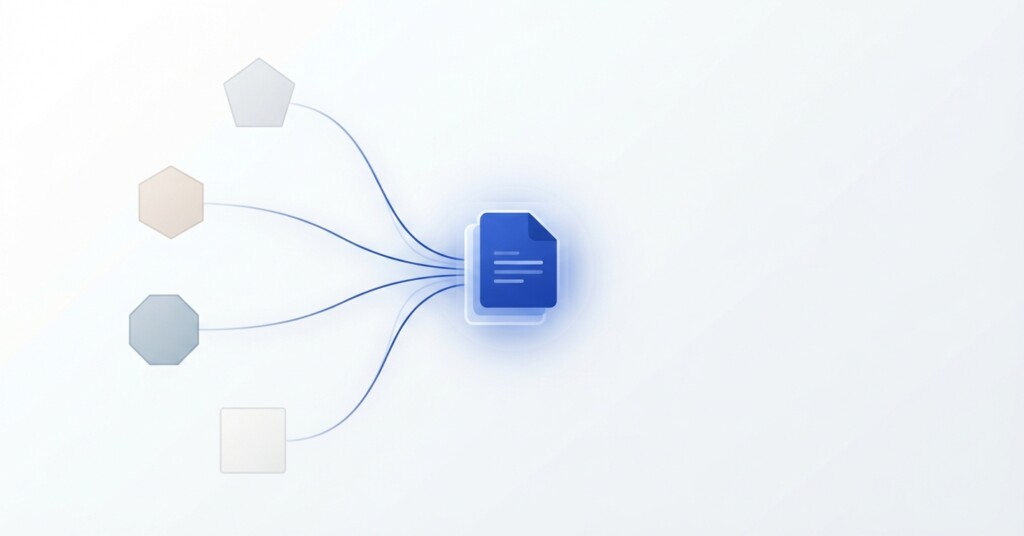
For many SaaS groups that have grown through acquisition or rapid international expansion, the accounting stack is rarely uniform. One subsidiary might run on Xero, another on QuickBooks Online, a third on NetSuite, and a fourth on a local statutory package in Germany or Singapore. Each platform has its own chart of accounts, its own currency settings, and its own reporting conventions. When the group CFO needs consolidated financials at month-end, someone — usually a senior accountant or financial controller — ends up manually extracting trial balances from four different systems, pasting them into a master Excel workbook, hunting for intercompany mismatches, translating foreign currency balances, and hoping nothing breaks before the board pack goes out.
This article walks through the practical steps to consolidate a multi-entity SaaS group under exactly these conditions. We cover chart-of-accounts mapping, intercompany eliminations, FX translation, non-controlling interests, and the journal entries that underpin each step. The goal is to give finance teams a clear, repeatable process — whether they eventually automate it or continue to manage it manually.
Step 1: Establish a Group Chart of Accounts Before You Touch the Numbers
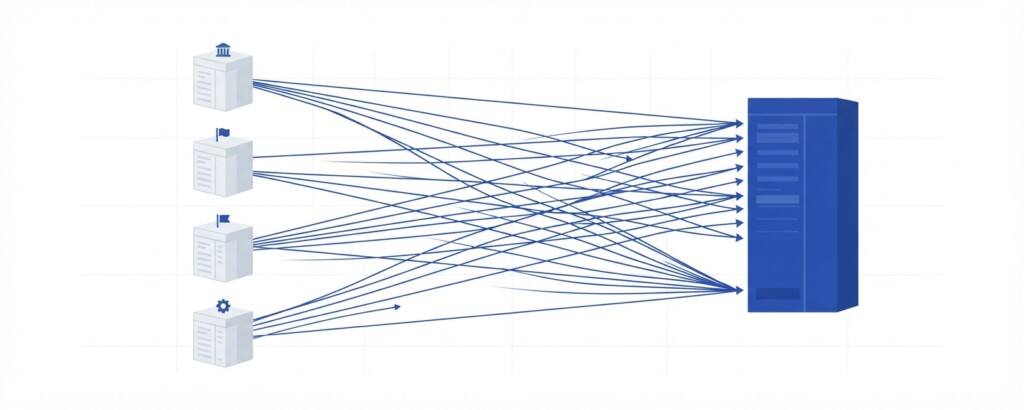
The single most important pre-requisite for multi-platform consolidation is a group chart of accounts (COA) that sits above each subsidiary’s local COA. Every local account must map to exactly one group account. Without this mapping layer, you cannot add trial balances together meaningfully — you will be combining apples and motor vehicles.
Stop building consolidations in spreadsheets.
BrizoConsol automates multi-entity consolidation — setup in minutes, reports the same day.
In practice, create a mapping table for each subsidiary. The table records the local account code, the local account name, the group account code, and the group account name. Some groups also add a ‘reporting category’ column to align with management reporting line items that differ from statutory presentation.
| Subsidiary | Local Account Code | Local Account Name | Group Account Code | Group Account Name |
|---|---|---|---|---|
| UK HoldCo (Xero) | 200 | Sales — Licences | REV-001 | Recurring Software Revenue |
| US SubCo (QuickBooks) | 4000 | Software Revenue | REV-001 | Recurring Software Revenue |
| DE SubCo (DATEV) | 8400 | Erlöse Software | REV-001 | Recurring Software Revenue |
| SG SubCo (Xero SG) | 210 | Subscription Income | REV-001 | Recurring Software Revenue |
| UK HoldCo (Xero) | 429 | Management Fees Received | IC-REV-001 | Intercompany Management Fee Income |
| US SubCo (QuickBooks) | 6500 | Management Fees | IC-EXP-001 | Intercompany Management Fee Expense |
Tip: Tag intercompany accounts explicitly in your group COA — prefix them with ‘IC-’ or a dedicated account range. This makes the elimination step far faster and reduces the risk of leaving intercompany balances in your consolidated statements by accident.
Step 2: Extract and Standardise Trial Balances at the Right Point in Time
Each subsidiary must produce a trial balance as at the same period-end date. This sounds obvious but causes real problems when subsidiaries are in different time zones, have different fiscal-year conventions, or close their books at different times. Establish a group close calendar and enforce it. Subsidiaries should post all period-end accruals, prepayments, and depreciation before sending trial balances to the group consolidation team.
Once you have trial balances extracted from each platform, apply your COA mapping to re-code every line to the group account code. The result should be four (or however many subsidiaries you have) standardised trial balances, all in local currency, all using group account codes. Only at this point should you begin the consolidation process.
Step 3: Translate Foreign Currency Subsidiaries into the Group Presentation Currency
If your group presents in GBP but your US subsidiary operates in USD and your German subsidiary in EUR, each foreign subsidiary’s trial balance must be translated before it can be combined with the parent. Under IFRS and most GAAP frameworks, the standard approach is:
- Balance sheet assets and liabilities (both monetary and non-monetary): translate at the closing rate (spot rate at period-end).
- Income statement items: translate at the average rate for the period (or, for material transactions, the rate at transaction date).
- Equity items (share capital, retained earnings brought forward): translate at historical rates.
- The resulting difference between net assets translated at closing rate and equity plus income translated at mixed rates is the foreign currency translation reserve (FCTR), recognised in other comprehensive income (OCI).
Here is a simplified example for the US subsidiary. Assume the USD/GBP closing rate is 0.79 and the average rate for the month is 0.81.
| US SubCo total assets (USD 1,200,000 × 0.79 closing rate) | £948,000 |
| US SubCo total liabilities (USD 400,000 × 0.79 closing rate) | £316,000 |
| Net assets at closing rate | £632,000 |
| Share capital at historical rate (USD 100,000 × 0.76) | £76,000 |
| Retained earnings b/f translated at prior closing rate | £210,000 |
| Current period profit (USD 200,000 × 0.81 average rate) | £162,000 |
| Total equity components before FCTR | £448,000 |
| Foreign Currency Translation Reserve (balancing figure) | £184,000 |
Warning: A common mistake is to translate the entire income statement at the closing rate rather than the average rate. This overstates or understates reported revenue and profit depending on whether the functional currency has strengthened or weakened. Always use the rate specified by your accounting policy — average rate for P&L, closing rate for balance sheet — and document which rates you used so auditors can verify them.
Step 4: Eliminate Intercompany Transactions and Balances
Once all subsidiary trial balances are translated into the group currency, the next step is to eliminate transactions that are internal to the group. From a consolidated perspective, the group cannot have a receivable from itself, and it cannot recognise revenue from selling to a fellow subsidiary. The three most common eliminations for a SaaS group are:
- Intercompany management fees charged from HoldCo to subsidiaries.
- Intercompany loans and the corresponding interest income and expense.
- Intercompany software licences or reseller arrangements between subsidiaries.
The journal entry to eliminate a management fee arrangement — where UK HoldCo has charged USD 50,000 (£40,500 at average rate) to US SubCo during the period — looks like this at group level:
| Account | Dr | Cr |
|---|---|---|
| IC-REV-001 Intercompany Management Fee Income (HoldCo) | 40,500 | |
| IC-EXP-001 Intercompany Management Fee Expense (US SubCo) | 40,500 |
Elimination of intercompany management fee: HoldCo income of £40,500 against US SubCo expense of £40,500 (USD 50,000 translated at 0.81 average rate). Net effect on consolidated P&L is nil.
A critical practical issue arises when the two subsidiaries have recorded the same transaction at different amounts — either because they used different exchange rates, or because one side has not yet posted the invoice. This is an intercompany mismatch, and it must be resolved before you can eliminate cleanly. The standard approach is to agree a group policy: one entity’s rate governs, and the other entity posts a currency adjustment. Document every mismatch and its resolution in a reconciliation schedule.
Step 5: Account for Non-Controlling Interests
If the group does not own 100% of every subsidiary, you need to calculate and present non-controlling interests (NCI). Suppose UK HoldCo owns 80% of the Singapore subsidiary, with an independent investor holding the remaining 20%. At consolidation, you include 100% of SG SubCo’s assets, liabilities, revenue, and expenses in the group statements — but then separately attribute the 20% share of net assets and net profit to NCI.
| Account | Dr | Cr |
|---|---|---|
| Retained Earnings — Group | 18,000 | |
| Non-Controlling Interest — Equity (Balance Sheet) | 18,000 |
Attribution of 20% of SG SubCo net profit (£90,000 × 20% = £18,000) to NCI on the consolidated balance sheet. A matching NCI line in the consolidated P&L shows the same £18,000 as profit attributable to non-controlling interests.

Step 6: Assemble the Consolidated Financial Statements
With translated trial balances, intercompany eliminations, and NCI adjustments all in place, you can now aggregate the group numbers. The consolidation working paper typically has one column per subsidiary (in group currency), an eliminations column, an NCI column, and a final consolidated column. Each line flows through to the consolidated income statement, balance sheet, and statement of changes in equity.
The FCTR calculated in Step 3 flows into the consolidated statement of other comprehensive income and accumulates in a separate component of equity. It does not pass through profit or loss unless the subsidiary is disposed of.
Practical note: Before finalising your consolidated balance sheet, verify that total debits equal total credits across all columns including eliminations. Even one missing elimination or a mistranslated balance will cause your consolidated balance sheet to fail to balance. Build a balancing check into your working paper.
The Real Cost of the Multi-Platform Problem
The workflow described above is logically straightforward, but executing it manually across four different accounting platforms every month is genuinely painful. The data extraction step alone — logging into each system, exporting trial balances, checking they are complete — can take several hours. The COA re-mapping, FX translation, and intercompany reconciliation steps add more. When there is a mismatch in an intercompany balance, tracking it back to the source transaction often means logging into two separate systems and comparing invoice-level detail.
Finance teams that manage this process in Excel typically maintain a large, fragile workbook with dozens of named ranges, VLOOKUP chains connecting the mapping table to the trial balance sheets, and manual overrides sprinkled throughout. When a subsidiary changes its chart of accounts mid-year — which SaaS companies frequently do as they refine their revenue categorisation — the mapping breaks silently and errors creep into the consolidated numbers.
The alternative is a consolidation layer that connects directly to each accounting platform via API, pulls trial balance data automatically, applies a maintained COA mapping, performs FX translation using a central rates table, flags intercompany mismatches for review, and generates the elimination journals automatically. This does not eliminate the need for finance team judgement — someone still needs to review mismatches, approve rates, and sign off on NCI calculations — but it removes the mechanical extraction and re-keying work that consumes the most time and creates the most risk.
Building a Repeatable Monthly Close Process
Whether you automate or not, the monthly close process for a multi-entity SaaS group should follow a consistent sequence. The order matters because each step depends on the previous one being complete.
- Distribute the close calendar to all subsidiaries with hard deadlines for posting cutoff and trial balance submission.
- Collect and validate trial balances from each platform — check that they balance, that all accruals are posted, and that no prior-period adjustments are pending.
- Apply COA mapping to standardise all trial balances to group account codes.
- Load agreed FX rates (closing and average) and translate all foreign currency trial balances to the group presentation currency.
- Run the intercompany matching process — compare IC balances between counterparties and document all mismatches with agreed resolutions.
- Post consolidation journals: intercompany eliminations, NCI attribution, goodwill adjustments if applicable, and any group-level accruals.
- Aggregate the consolidated trial balance and produce draft group financial statements.
- Review and sign off — CFO or Group FC reviews P&L against prior period and budget, investigates material variances, and approves the pack.
- Distribute the board pack and management reports.
Groups that enforce this sequence and assign clear ownership to each step consistently close faster than those that treat consolidation as an ad-hoc exercise at the end of the month. The difference between a five-day close and a twelve-day close is almost always a process and data problem, not a capacity problem.
Summary
Consolidating a multi-entity SaaS group where each subsidiary uses a different accounting platform is not conceptually complex, but it is operationally demanding. The foundation is a group chart of accounts with explicit intercompany account tagging. On top of that, you need a disciplined FX translation process using consistent rates, a rigorous intercompany matching and elimination workflow, and clear NCI calculations where ownership is not 100%. Each of these steps generates specific journal entries that must be documented and auditable. Done manually in Excel, the process is time-consuming and fragile. Done with a consolidation tool that connects to each platform directly, the mechanical work shrinks dramatically — and the finance team can spend its time on analysis rather than data wrangling.
See Multi-Entity Consolidation Without the Spreadsheet Pain
BrizoConsol connects to multiple accounting platforms, maps to a group chart of accounts, translates foreign currencies, and flags intercompany mismatches automatically — so your team can focus on review and analysis rather than data extraction.