Month-End Group Consolidation in Under 30 Minutes: A Practical Framework for Finance Teams
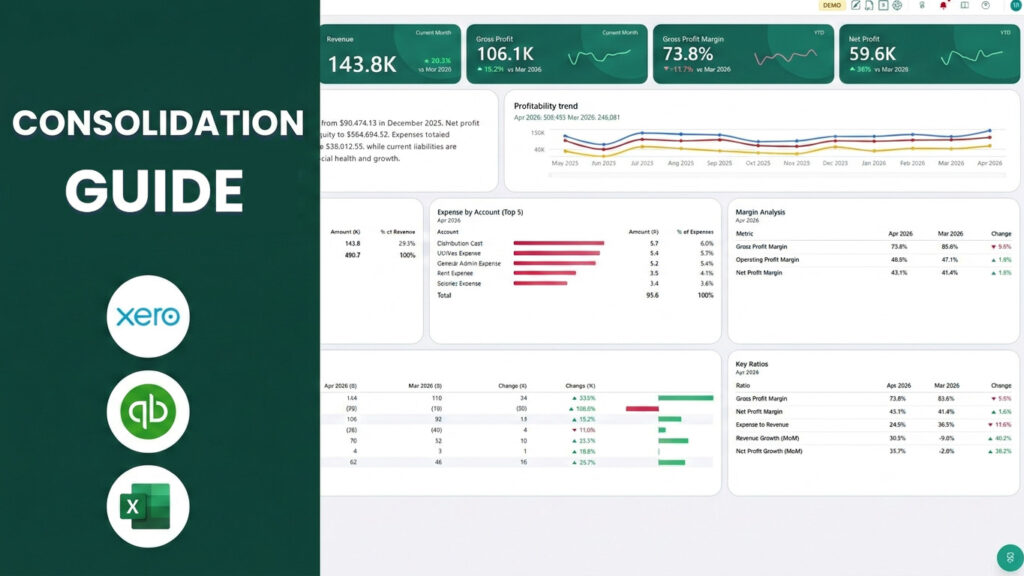
For many finance teams, month-end consolidation remains one of the most time-consuming parts of the reporting cycle.
Data is collected from multiple entities, accounts are mapped into a group structure, intercompany balances are reviewed, and reports are prepared for management. As the group grows, these activities often become increasingly dependent on spreadsheets and manual processes.
The result is a close process that takes days instead of hours.
Close your books faster every month.
BrizoConsol streamlines your month-end consolidation so your team spends less time on manual work.
In this article, we explore a practical framework for streamlining month-end group consolidation and demonstrate how finance teams can create a more scalable reporting process.
Watch the Walkthrough
Why Month-End Consolidation Becomes a Bottleneck
Most consolidation delays are not caused by accounting complexity.
They are caused by process complexity.
Finance teams often spend significant time:
- Collecting information from multiple entities
- Managing different chart of accounts structures
- Reviewing intercompany transactions
- Preparing elimination adjustments
- Maintaining spreadsheet models
- Validating final reports
While these activities are necessary, performing them manually every month creates inefficiencies and increases reporting risk.
As the number of entities increases, the workload grows disproportionately.
The Four Building Blocks of Efficient Consolidation
Organizations that consistently produce timely group reports typically focus on four areas.
1. Centralized Entity Management
The first challenge is bringing together financial information from across the group.
Instead of collecting files every reporting period, leading finance teams maintain a centralized environment where all entities can be reviewed from a single location.
This reduces administrative effort and improves visibility across the group.
2. Consistent Account Mapping
Different entities frequently use different account names and reporting structures.
Without a common framework, finance teams spend valuable time reclassifying balances before consolidation can begin.
A standardized mapping structure allows local accounts to flow into a common group chart of accounts, creating consistency across reporting periods.
3. Controlled Intercompany Eliminations
Intercompany balances are a normal part of operating a group structure.
Management fees, loans, internal sales, and shared service arrangements all create transactions that should not be reflected in consolidated financial statements.
A controlled elimination process helps ensure these balances are treated consistently and transparently.
4. Repeatable Group Reporting
The final objective is not simply consolidation.
The objective is timely decision-making.
Finance teams need fast access to:
- Consolidated Profit & Loss Statements
- Consolidated Balance Sheets
- Group Cash Flow Statements
- Intercompany Reconciliation Reports
- Management Dashboards
A repeatable reporting process reduces month-end pressure and improves confidence in the numbers.
A Simple Month-End Consolidation Workflow
In the video above, we demonstrate a typical consolidation workflow using BrizoConsol.
Step 1: Connect Entities
Review all companies within the group structure from a centralized consolidation environment.
Step 2: Review Account Mapping
Confirm that local accounts are mapped to the appropriate group reporting categories.
Step 3: Review Elimination Rules
Validate intercompany relationships and elimination configurations across the group.
Step 4: Review Reports and Dashboards
Generate consolidated financial statements and management dashboards from a single source of truth.
The process focuses on maintaining consistency rather than rebuilding reports from scratch each month.
Common Signs Your Consolidation Process Needs Improvement
Many organizations begin looking for a better approach when they encounter one or more of the following challenges:
- Consolidation takes several days to complete
- Multiple spreadsheet versions are circulated among the team
- Formula errors require frequent investigation
- Intercompany reconciliations consume significant time
- Group reporting becomes more difficult as entities are added
- Management reports are delayed waiting for consolidation to finish
If these issues sound familiar, the root cause is often process design rather than accounting complexity.
Key Takeaways
Month-end group consolidation does not need to be a lengthy manual exercise.
By centralizing entity management, standardizing account mappings, maintaining controlled elimination processes, and creating repeatable reporting workflows, finance teams can significantly reduce the effort required each reporting period.
The goal is not simply to close faster.
The goal is to spend less time preparing reports and more time understanding what the numbers are telling the business.
See BrizoConsol in Action
BrizoConsol helps finance teams manage group reporting, account mappings, intercompany eliminations, and consolidated financial statements from a single platform.
Explore how BrizoConsol simplifies month-end group consolidation and supports multi-entity reporting as your organization grows. Learn more or see it in action →