How to Prepare for Audit with Consolidated Financials: A Finance Leader’s Guide
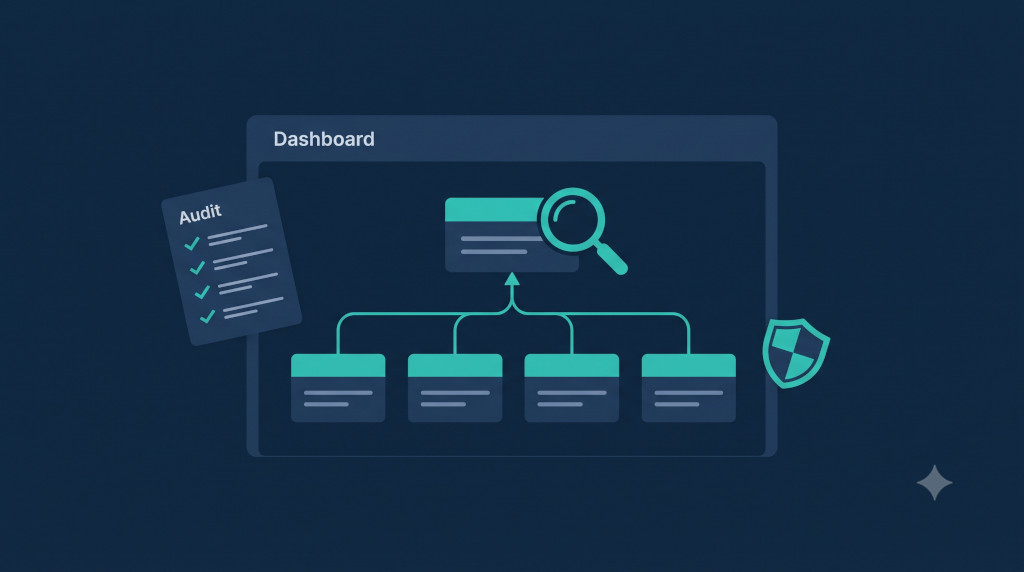
For a single-entity business, audit preparation is already a demanding process. For a multi-entity group, it is significantly more complex. Finance leaders must not only ensure that each subsidiary’s accounts are accurate and reconciled, but also that the consolidated financial statements present a clear, consistent, and auditable picture of the group as a whole. Every intercompany transaction must be eliminated, every foreign currency balance translated correctly, and every non-controlling interest calculated and disclosed in accordance with the applicable reporting framework.
When any of these elements are unclear, incomplete, or applied inconsistently, auditors inevitably raise questions. Reporting timelines can slip, additional evidence may be required, and finance teams often find themselves spending valuable time responding to audit queries rather than focusing on higher-value activities. As group structures become larger and more geographically diverse, maintaining a controlled and well-documented consolidation process becomes increasingly important.
This guide is intended for CFOs, group financial controllers, and finance managers who want to build a consolidation process that not only produces accurate financial statements but also withstands audit scrutiny. Whether you are preparing for your first group audit or looking to reduce the time and effort spent responding to auditor requests, the principles and practical guidance covered here will help your organisation approach every audit with greater confidence, efficiency, and control.
Automate NCI calculations across all your entities.
BrizoConsol handles non-controlling interest automatically — no manual adjustments required.
Why Group Audit Preparation Is Fundamentally Different
When auditors review a consolidated set of financial statements, they are not simply assessing whether the numbers add up across entities. They are evaluating whether the consolidation methodology itself is robust, consistently applied, and appropriately documented. This includes reviewing how intercompany balances have been identified and eliminated, whether the group chart of accounts has been applied consistently across subsidiaries, how foreign currency balances have been translated into the group’s presentation currency, and how non-controlling interests have been calculated and disclosed. Auditors expect to see clear evidence that these processes have been applied accurately and consistently throughout the reporting period.
In practice, many multi-entity organisations find this challenging because their consolidation processes have evolved incrementally over time. What may have started as a spreadsheet-based solution for a small number of entities is often expanded to support a much larger group structure. As complexity increases, maintaining a clear audit trail becomes more difficult. Consolidation adjustments may be recorded in spreadsheets with limited version control, intercompany eliminations may depend on manual calculations, and foreign exchange rates may be maintained across multiple sources rather than from a centrally governed process.
These limitations often become apparent during the audit itself. When auditors seek to understand how individual entity trial balances were transformed into the final consolidated figures, finance teams can struggle to provide complete and consistent supporting evidence. The result is typically a longer audit process, multiple rounds of follow-up questions, and additional pressure on the finance team. Establishing a structured, well-documented consolidation process with a clear audit trail is therefore essential, not only for audit compliance but also for improving the efficiency and reliability of group financial reporting.
What Auditors Look for in Consolidated Financial Statements
Understanding what auditors are looking for is the first step in preparing effectively for a group audit. At a high level, auditors focus on three core principles: completeness, accuracy, and consistency. They need to be satisfied that all entities within the group have been accounted for correctly, that consolidation adjustments are complete and mathematically accurate, and that accounting policies and consolidation methodologies have been applied consistently from one reporting period to the next.
One of the primary areas of focus is intercompany reconciliation. Auditors will expect evidence that intercompany balances and transactions have been identified, matched between counterparties, and eliminated appropriately during the consolidation process. Any differences between entities should be investigated, explained, and resolved before the consolidated financial statements are finalised. Unresolved intercompany discrepancies are often viewed as indicators of weaknesses in the group’s financial control environment.
Auditors will also review opening balances and foreign currency translation procedures. Opening balances are typically traced back to the prior year’s audited financial statements to confirm that the current reporting period starts from an accurate and approved position. For groups with foreign subsidiaries, auditors will examine the exchange rates used in the consolidation process, verifying that appropriate rates have been applied to income statement and balance sheet items and that foreign currency translation differences have been recorded and presented correctly.
A further area of review is the quality and completeness of the group’s financial disclosures. This includes disclosures relating to the basis of consolidation, non-controlling interests, related party transactions, segment reporting, and other requirements of the applicable reporting framework. Finance teams that maintain clear documentation, robust supporting schedules, and a well-organised audit trail across each of these areas are typically able to respond to auditor requests more efficiently, resulting in a smoother audit process and fewer rounds of follow-up enquiries.
Building an Audit-Ready Consolidation Process
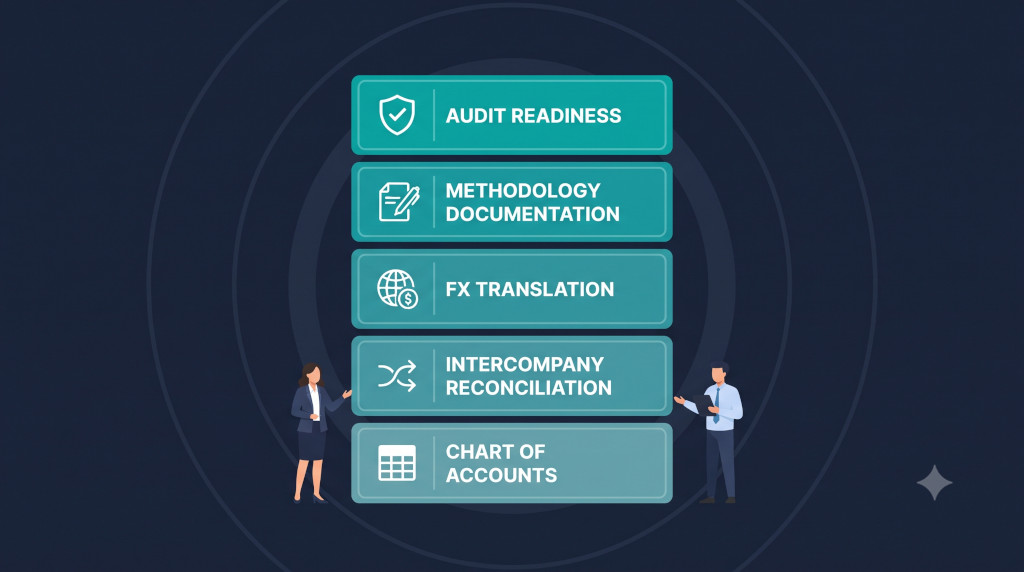
An audit-ready consolidation process cannot be built in the weeks immediately before the audit begins. It must be embedded within the monthly close cycle so that, by the time year-end reporting arrives, the finance team has a full year of reconciled, documented, and well-controlled consolidation data. Organisations that treat audit preparation as an ongoing process rather than an annual exercise typically experience smoother audits, fewer queries, and less pressure on finance resources.
The foundation of this process is a consistent chart of accounts structure across the group. Each subsidiary should map its local accounts to a clearly defined group chart of accounts before financial data enters the consolidation process. Where entities use inconsistent account structures or varying levels of detail, consolidation often becomes a manual mapping exercise that increases the risk of misclassification, inconsistency, and audit challenge. A standardised chart of accounts helps ensure that financial information is reported consistently across all entities and periods.
Equally important is a disciplined approach to intercompany reconciliation. Intercompany balances and transactions should be identified, reconciled, and agreed at every month-end close before the consolidation process is completed. Any differences should be investigated and resolved promptly rather than carried forward into subsequent reporting periods. Consistent monthly reconciliation creates a documented history of intercompany adjustments and helps ensure that the group reaches year-end with a clean and supportable intercompany position.
Foreign currency translation should also be managed through a controlled and repeatable process. Exchange rates should be sourced from an approved reference, applied consistently across the group, and retained within the consolidation system together with a record of the periods to which they relate. This allows the finance team to demonstrate exactly how foreign currency balances were translated and provides auditors with a clear audit trail for reviewing translation adjustments and reserve movements.
Finally, every consolidation adjustment should be recorded and fully supported. Whether the adjustment relates to intercompany eliminations, reclassifications, ownership changes, or foreign currency translation, it should be documented with a clear description, supporting evidence, and an explanation of its purpose. Maintaining this level of documentation throughout the year creates a transparent audit trail and enables finance teams to respond to auditor enquiries quickly and confidently, reducing the risk of delays during the audit process.
The Audit Trail from Trial Balance to Consolidated Statement
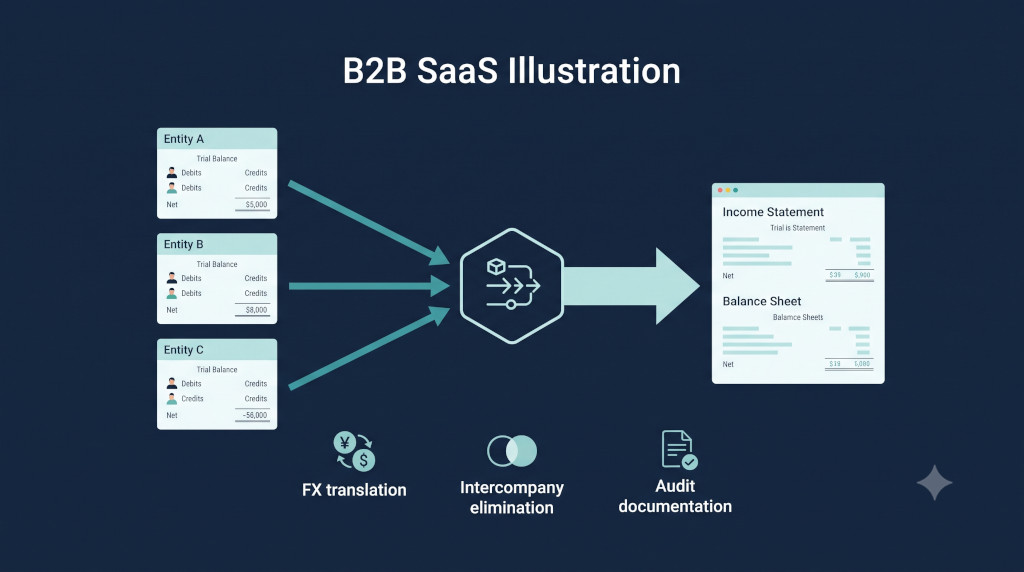
One of the most effective ways for a finance team to demonstrate control over the consolidation process is to maintain a complete and traceable audit trail from each subsidiary’s trial balance through to the final consolidated financial statements. Auditors expect to be able to trace balances through every stage of the consolidation process, including entity-level reporting, consolidation adjustments, intercompany eliminations, and foreign currency translation. The ability to explain precisely how a reported number was derived is a key indicator of a well-governed finance function.
Achieving this level of transparency can be challenging in spreadsheet-based consolidation environments. As consolidation models grow in complexity, adjustments are often spread across multiple linked workbooks, calculations become difficult to trace, and version control may be inconsistent. Over time, knowledge of how the consolidation operates can become concentrated in a small number of individuals, creating additional operational and audit risk.
A dedicated consolidation platform helps address these challenges by maintaining the audit trail as part of the consolidation process itself. Every adjustment, elimination, and approval can be recorded with a timestamp, an associated user, and a clear record of the underlying data and calculations. This enables finance teams to reconstruct the consolidation process for any reporting period and demonstrate how balances flowed from individual entities into the final consolidated results.
While this capability is valuable during an external audit, its benefits extend far beyond the audit process. A comprehensive audit trail supports internal reviews, assists management in investigating variances and unusual movements, and provides a reliable foundation for responding to board or stakeholder queries. When transparency and traceability are built into the consolidation process rather than assembled retrospectively, finance teams can spend less time preparing audit evidence and more time focusing on analysis, insight, and decision support.
How BrizoConsol Supports Audit-Ready Group Reporting
BrizoConsol has been designed to produce consolidated financial statements that are not only accurate but also fully auditable. Every consolidation run is built on a structured data model in which each entity’s trial balance is imported, mapped to the group chart of accounts, and combined with the results of other entities through a controlled and documented consolidation process. This approach helps finance teams maintain consistency across the group while creating a clear foundation for audit review.
Intercompany eliminations are applied systematically based on the intercompany relationships defined within the platform, removing the need for separate manual elimination spreadsheets. This reduces the risk of omissions, duplication, and calculation errors while providing a complete record of the eliminations applied during each reporting period. Auditors can therefore review not only the final consolidated figures but also the underlying elimination entries and supporting calculations that contributed to them.
BrizoConsol also automates the treatment of foreign currency translation. Appropriate closing and average rates can be applied consistently across entities, with currency translation differences recorded and accumulated in accordance with the relevant reporting requirements. The platform maintains a history of exchange rates and translation calculations, providing finance teams with the supporting evidence commonly requested during audit reviews of foreign currency balances and reserves.
In addition, BrizoConsol’s drill-down reporting capabilities allow users to move directly from consolidated balances to the underlying entity-level data that supports them. This creates complete transparency over the composition of reported figures and enables finance teams to respond quickly to auditor enquiries, management questions, and internal reviews. By providing a structured, documented, and repeatable consolidation process, BrizoConsol helps organisations reduce audit preparation effort, strengthen reporting controls, and maintain greater confidence in the accuracy and integrity of their consolidated financial statements.
Practical Steps to Take Before Your Next Audit
For finance teams preparing for an upcoming group audit, there are several practical actions that will make a meaningful difference to the quality and efficiency of the audit process. The first is to conduct a full review of intercompany balances as at the last month end and confirm that every balance is reconciled and agreed between the relevant entities. If there are unreconciled differences, these should be investigated and resolved before the audit begins rather than during it. The second action is to document the consolidation methodology that has been applied during the year. This includes the basis on which entities have been included or excluded from the group, the method used for calculating non-controlling interests, the currency translation methodology, and the basis on which intercompany eliminations have been calculated. Auditors will ask for this documentation, and having it prepared in advance saves time and demonstrates a controlled process. The third action is to review the group chart of accounts and confirm that all entities are using it consistently. Where local accounts have been added during the year, these should be mapped to the group chart of accounts and the mapping reviewed for accuracy. The fourth action is to ensure that the consolidation system or process can produce a clear reconciliation from each entity’s closing trial balance to the consolidated financial statements. If this reconciliation cannot be produced clearly and quickly, it is an indicator that the consolidation process needs to be strengthened before the next close cycle. Finally, finance teams should consider running a preliminary consolidation at an interim date and reviewing the output as if they were the auditor. Identifying gaps or inconsistencies in the interim pack gives the team time to address them before the year-end audit, rather than discovering them under audit pressure.
Conclusion: Audit Confidence Starts at Month-End Close
The quality of a group audit is determined long before the auditors arrive. It is shaped by the discipline of the monthly close process, the accuracy of intercompany reconciliations, the consistency of the group chart of accounts, and the quality of the documentation supporting each consolidation adjustment. Organisations that embed these controls into their regular reporting cycle are typically able to approach audits with greater confidence and significantly less disruption to day-to-day finance operations.
When these foundations are in place, audit preparation becomes a process of organising and presenting information that has already been validated rather than reconstructing calculations and supporting evidence under time pressure. The result is a more efficient audit process, fewer queries from auditors, and greater confidence in the accuracy and integrity of the consolidated financial statements.
BrizoConsol supports this approach by providing a structured, repeatable, and fully documented consolidation process that produces audit-ready outputs at every close. For CFOs, group financial controllers, and finance managers, the ability to reduce audit preparation effort while strengthening reporting governance represents a significant operational advantage. By building audit readiness into the consolidation process itself, organisations can spend less time defending their numbers and more time using them to make informed business decisions.