Zoho Books Consolidation Software for Accounting Firms: Delivering Group Accounts for Multi-Entity Clients
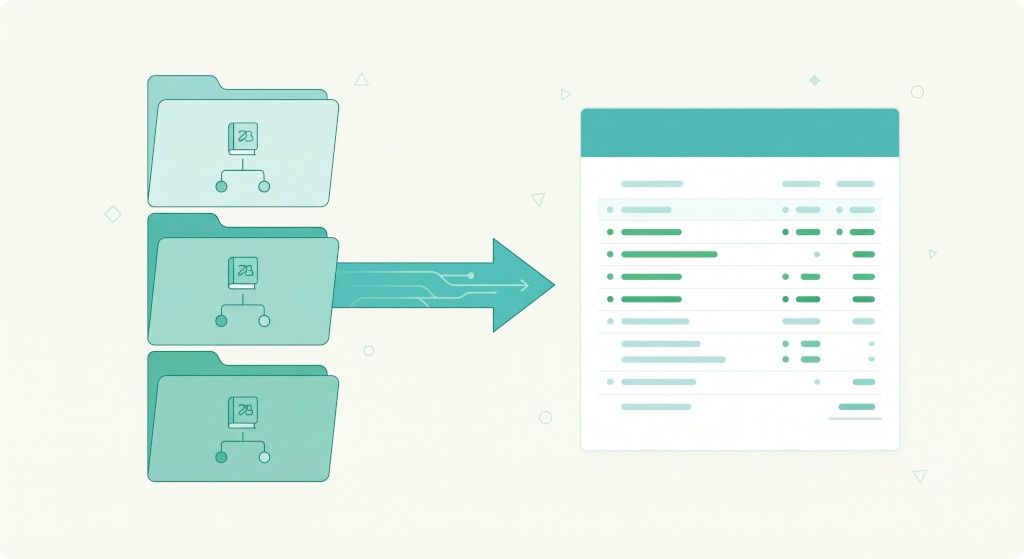
Most accounting firms working with Zoho Books clients encounter the same scenario sooner or later. A client that started as a single trading entity has grown — through acquisition, geographic expansion, or structural reorganisation — into a group of two, three, or four separate Zoho Books organisations. Each organisation is well-maintained. The bookkeeping is clean. The monthly figures are reliable. The problem is that Zoho Books has no native mechanism to pull those organisations together into a single consolidated set of accounts.
So the firm builds a spreadsheet. Trial balances are exported from each organisation, pasted into a consolidation workbook, mapped to a common chart of accounts, intercompany balances are manually matched and eliminated, and a consolidated P&L and balance sheet are assembled. It works — the first time. By month six, the workbook has grown to forty tabs, the account mapping has drifted as clients add new accounts, and the person who built it has left the firm.
This guide covers what accounting firms need to know about delivering Zoho Books consolidation for multi-entity clients at scale — including what Zoho Books can and cannot do natively, how purpose-built consolidation software changes the workflow, and what a practical three-entity consolidation looks like in practice.
Group consolidation for Zoho Books — fast and accurate.
Connect your Zoho Books organisations and consolidate into one clean group view.
Where Zoho Books Hits Its Limits for Group Clients
Zoho Books is a capable cloud accounting system for individual entities. It handles invoicing, bank reconciliation, expense tracking, and single-entity reporting well, and its integration with the broader Zoho ecosystem makes it a natural choice for businesses already using Zoho CRM or Zoho Analytics.
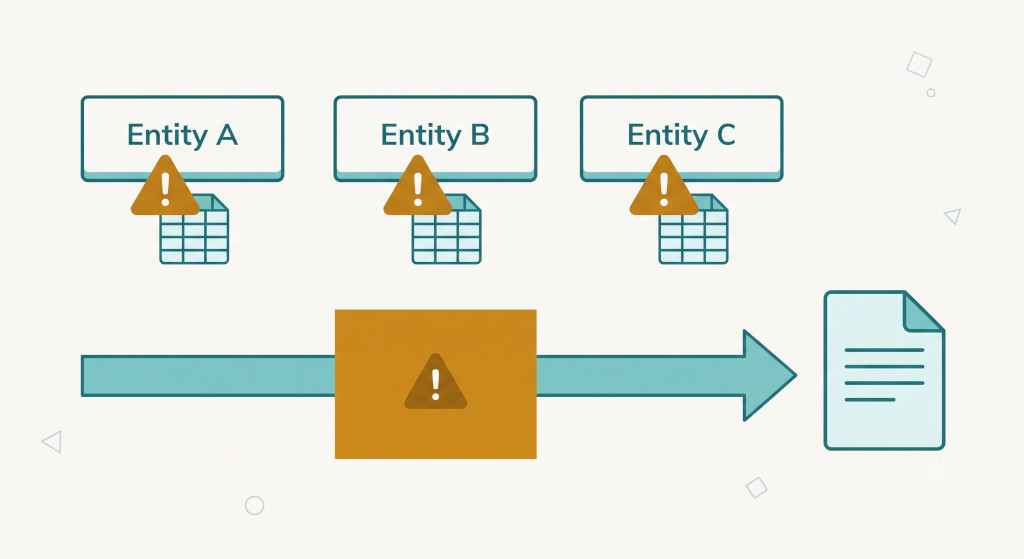
For multi-entity groups, however, there are structural limitations that no amount of Zoho configuration can address. Zoho Books treats each organisation as a completely separate data silo — there is no parent-level view, no cross-organisation reporting, and no built-in mechanism to perform the eliminations that consolidation requires. Specifically, Zoho Books cannot perform any of the following for a group of organisations: eliminate intercompany sales and purchases, match and remove intercompany loan balances, translate subsidiary financials into a group presentation currency, calculate non-controlling interest where ownership is less than 100%, or produce a consolidated statement of cash flows.
Important: Zoho Analytics can pull data from multiple Zoho Books organisations into dashboards and combined reports, but it does not perform consolidation accounting. Aggregating figures without eliminating intercompany transactions produces inflated revenue, overstated assets, and a balance sheet that does not balance on a group basis. This is not a consolidated set of accounts — it is a combined view.
For accounting firms, this matters because clients often do not understand the distinction. A group CFO who has set up a Zoho Analytics cross-organisation dashboard may believe they already have consolidated accounts. Part of the firm’s job is explaining why elimination adjustments are required, and then delivering the output that reflects them.
The Scale Problem for Accounting Firms Managing Zoho Books Group Clients
A single Zoho Books group consolidation, done manually in a spreadsheet, might take a senior accountant four to six hours per month. That is manageable for one client. For a firm with five or six group clients — each with two to four Zoho Books organisations, each requiring full intercompany eliminations and currency translation — the cumulative burden is significant, and it falls on the most experienced (and expensive) members of the team.
The workload compounds in predictable ways. Every time a client adds a new Zoho Books organisation, the consolidation workbook must be restructured. Every time a client adds a new account to one of their organisations, the mapping table must be updated. Every time a client has an intercompany mismatch — one entity recording a different intercompany balance to its counterpart — the discrepancy must be traced manually before the consolidation can close.
For firms that are serious about growing a multi-entity client base, the spreadsheet model does not scale. The answer is a dedicated consolidation platform that connects directly to Zoho Books and handles the technical accounting automatically.
How Zoho Books Consolidation Software Works
Purpose-built consolidation software for accounting firms integrates directly with Zoho Books via API. Once each client organisation is connected, the platform pulls the trial balance data automatically at whatever frequency the firm requires — monthly for most management reporting cycles, or on demand for year-end and audit work.
The firm maps each organisation’s chart of accounts to a common group chart of accounts once, during onboarding. BrizoConsol’s AI Auto-Map feature handles the initial mapping automatically by matching account names and categories across organisations, with the firm reviewing and confirming the output. Once confirmed, those mappings are stored and reapplied on every subsequent import. When a client adds a new Zoho Books account, it surfaces in the platform for mapping rather than silently falling out of the consolidation.
Intercompany eliminations are configured once per client group. The firm specifies which entities transact with each other and what type of eliminations apply — intercompany sales and cost of sales, intercompany loan balances, management fee charges, dividends, and so on. BrizoConsol then matches the recorded balances across counterparty entities on every close and generates the elimination journals automatically. Mismatches are surfaced in real time rather than discovered at the end of the process.
For Zoho Books clients with overseas subsidiaries, currency translation is applied automatically using the closing and average rates entered for each period. The cumulative translation adjustment is calculated and posted to the CTA reserve without manual intervention — removing one of the most error-prone steps in any multi-currency consolidation.
A Practical Example: Consolidating a Three-Entity Zoho Books Group
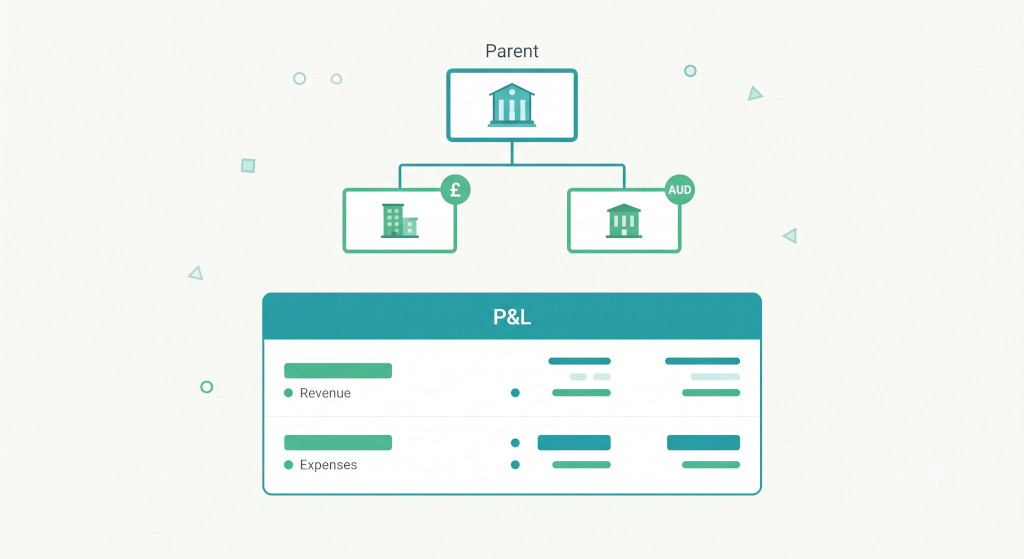
Meridian Services Group is a professional services business with three Zoho Books organisations: Meridian UK Ltd (the parent, reporting in GBP), Meridian Australia Pty Ltd (a wholly-owned subsidiary, reporting in AUD), and Meridian Management Ltd (a UK-registered holding entity that charges management fees to both trading entities).
Each month, Meridian Management charges £12,000 to Meridian UK and the AUD equivalent to Meridian Australia. Meridian UK and Meridian Australia also have intercompany loan balances with the parent. The group’s accounting firm previously spent five hours each month on the consolidation spreadsheet. After connecting all three organisations to BrizoConsol, the monthly workflow runs as follows.
| Step | Task | Time (before) | Time (after) |
|---|---|---|---|
| 1 | Export trial balances from three Zoho Books organisations | 45 min | Automated |
| 2 | Map accounts to group chart of accounts | 60 min | Automated (stored) |
| 3 | Translate AUD subsidiary into GBP | 30 min | Automated |
| 4 | Eliminate intercompany management fees | 30 min | Automated |
| 5 | Eliminate intercompany loan balances | 20 min | Automated |
| 6 | Review mismatches and post adjustments | 45 min | 15 min |
| 7 | Produce and deliver consolidated P&L and balance sheet | 50 min | 10 min |
| Total per month | ~5 hrs | ~25 min | |
The time saving is significant, but the more important change is where the accountant’s attention goes. Instead of spending most of the engagement assembling the consolidation mechanics, the accountant spends the available time reviewing the output, identifying anomalies, and providing the analysis that the client actually values — commentary on margin movements, variance against budget, and the group cash position.
Delivering Reports to Zoho Books Group Clients
Once the consolidation is complete, BrizoConsol’s Insight Packages handle report delivery. The firm configures a package for each client group — specifying which reports to include (consolidated P&L, balance sheet, entity-level breakdowns, variance analysis), the PDF format and orientation, and the delivery schedule. Packages are sent automatically to the client’s nominated recipients at the agreed time each month, branded consistently and without any manual preparation on the day of delivery.
For firms managing multiple Zoho Books group clients, this means that month-end report delivery — previously a co-ordination exercise involving multiple exports, PDF assemblies, and email threads — becomes a background process that runs without staff intervention.
What to Look for in Zoho Books Consolidation Software
Not all consolidation platforms connect natively to Zoho Books. Some require manual CSV uploads of trial balance data, which reintroduces the manual step that the platform is supposed to eliminate. When evaluating options, accounting firms should look for the following. A direct Zoho Books API integration that pulls data automatically, without requiring the firm or the client to export anything. Stored account mappings that persist across periods and surface new accounts for review rather than silently dropping them. Automated intercompany matching with mismatch reporting, not just a tool for posting elimination journals manually. Multi-currency support with automatic CTA calculation for groups with overseas entities. And client-level access controls so each client can log in to view their own consolidation without seeing other clients’ data.
BrizoConsol meets all of these requirements and connects directly to Zoho Books alongside Xero, QuickBooks, and MYOB — making it the natural choice for firms whose client base spans multiple accounting platforms.
Scale Your Zoho Books Group Reporting Practice
Connect your clients’ Zoho Books organisations, automate intercompany eliminations, and deliver consolidated accounts in a fraction of the time. Start Free Trial