How to Reconcile Intercompany Loan Balances When Both Entities Record Accrued Interest on Different Schedules
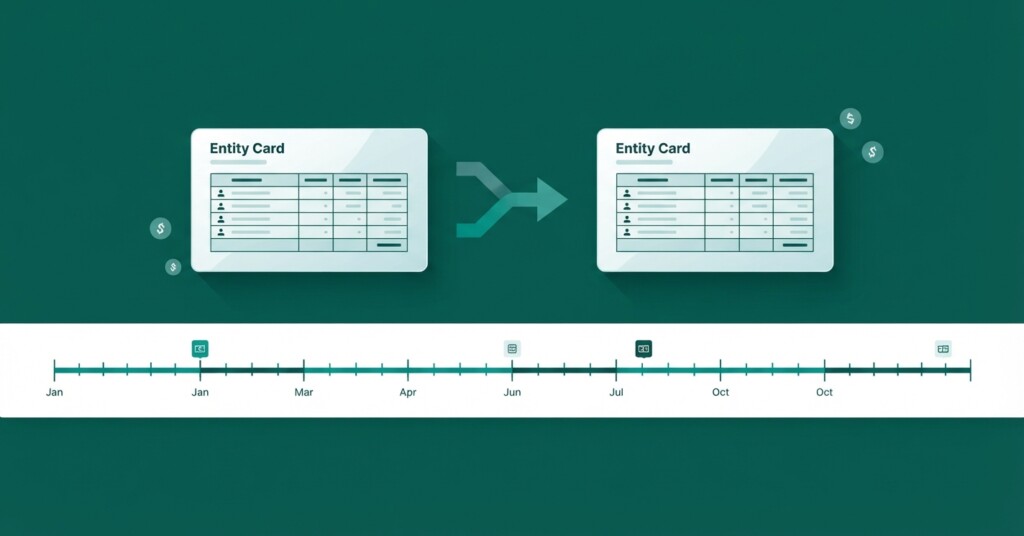
Intercompany loan reconciliations are one of the most persistent headaches in group consolidation. When two entities within the same group have a lending arrangement, both sides should, in theory, record matching balances at period end. In practice, they rarely do — and accrued interest is one of the most common culprits. If the parent accrues interest monthly but the subsidiary accrues quarterly, or if each entity uses a slightly different day-count convention, the balances will diverge every single month. Multiply this across several intercompany loans in a group with multiple entities, and you have a reconciliation problem that can hold up your financial close for days.
This article walks through the mechanics of why these mismatches occur, how to identify and quantify the difference, what journal adjustments are needed, and how to design a more systematic approach so the problem does not repeat itself every period.
Why Intercompany Loan Balances Diverge
An intercompany loan is, at its core, a simple arrangement: one group entity lends cash to another, charges interest, and both sides recognise the asset and liability symmetrically. But ‘symmetrically’ is where things fall apart in practice. Consider a parent company (ParentCo) that lends £500,000 to its subsidiary (SubCo) at 6% per annum. ParentCo’s finance team accrues interest at the end of each calendar month, working from the loan agreement. SubCo, operating in a different country with a different accounting system, accrues interest at the end of each quarter because that is when the cash settlement actually happens.
Automate NCI calculations across all your entities.
BrizoConsol handles non-controlling interest automatically — no manual adjustments required.
At the end of January, ParentCo has recorded one month of accrued interest receivable. SubCo has recorded nothing, because its next accrual is due at the end of March. The intercompany balances are already out of sync, and no elimination journal will balance until the underlying entity-level postings agree — or you make a deliberate consolidation adjustment to bridge them.
A Worked Example: Calculating the Mismatch
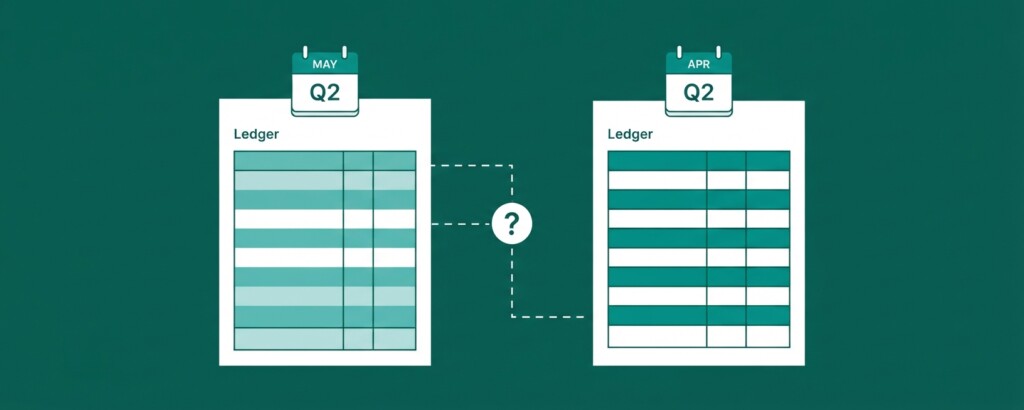
Let us put numbers to this. ParentCo has a 31 January month-end. It accrues interest on a monthly basis using an Actual/365 day-count. SubCo uses a quarterly accrual on a 30/360 basis, which is common in some European jurisdictions. The loan was drawn on 1 January, so 31 days have elapsed by month end.
| Loan principal | £500,000 |
| Annual interest rate | 6.00% |
| ParentCo accrual — Actual/365: £500,000 × 6% × 31/365 | £2,547.95 |
| SubCo accrual — 30/360 (quarterly, so nil at Jan end) | £0.00 |
| Intercompany balance mismatch at 31 January | £2,547.95 |
This £2,547.95 difference means that when the consolidation team tries to eliminate the intercompany loan, the asset side (ParentCo’s receivable including accrued interest) is £2,547.95 higher than the liability side (SubCo’s payable). The elimination will leave a residual balance in the consolidated trial balance — which, if not corrected, flows into consolidated net assets and distorts the balance sheet.
Even small accrued interest mismatches compound across multiple loans and periods. A £2,500 difference on one loan becomes a material issue when you have eight intercompany facilities across six entities, each with slightly different accrual conventions.
Step One: Identify Every Intercompany Loan and Its Accrual Basis
Before you can reconcile anything, you need a complete intercompany loan register. This should document each loan’s principal, interest rate, draw-down date, repayment schedule, the accrual frequency used by each entity, the day-count convention, and the currency. If any of these differ between borrower and lender, you have a potential mismatch at every period end.
| Loan Ref | Lender | Borrower | Principal | Rate | Lender Accrual Freq | Borrower Accrual Freq | Day-Count (Lender) | Day-Count (Borrower) |
|---|---|---|---|---|---|---|---|---|
| IC-001 | ParentCo | SubCo UK | £500,000 | 6.00% | Monthly | Quarterly | Actual/365 | 30/360 |
| IC-002 | ParentCo | SubCo DE | €300,000 | 4.50% | Monthly | Monthly | Actual/365 | Actual/365 |
| IC-003 | SubCo UK | SubCo AU | AUD 200,000 | 5.00% | Monthly | Quarterly | Actual/365 | Actual/360 |
IC-002 in the table above should reconcile cleanly each month because both entities use the same accrual frequency and day-count convention. IC-001 and IC-003, however, will produce a mismatch at every period end — with large timing gaps outside quarter boundaries due to differing accrual frequencies, and day-count variances even at quarter ends. This structured view tells you immediately which loans are likely to generate reconciliation work and which can be trusted to agree automatically.
Step Two: Determine Who Is Correct and Who Needs to Adjust
This is a policy question as much as a technical one. In most groups, the loan agreement is the authoritative document. If the agreement says interest accrues monthly, both entities should be accruing monthly. If one entity is not doing this, the issue is a sub-entity accounting policy deviation, not a consolidation problem. The fix should happen at entity level, not through a consolidation journal that papers over a systematic error.
However, in the real world, changing a subsidiary’s accounting system behaviour mid-year — especially if it is a local statutory requirement or a system limitation — is not always possible before the month-end deadline. In that case, you have two options: raise a consolidation adjustment in the group books, or raise a top-side journal in the subsidiary’s ledger before reporting into the consolidation. Both are valid; the choice depends on your group reporting structure and whether the adjustment needs to flow into entity-level statutory accounts.
Never eliminate intercompany loan balances at the gross principal amount only and ignore accrued interest. The full intercompany balance includes principal plus accrued interest, and both components must be eliminated. Leaving accrued interest uneliminated overstates both consolidated assets and liabilities, and can introduce fictitious interest income or expense into the consolidated income statement.
Step Three: The Consolidation Journals
Assume you are working at 31 January and have confirmed that SubCo should be recording £2,547.95 of accrued interest but has not yet done so because of its quarterly accrual policy. You will raise a consolidation adjustment in SubCo’s books (or as a group-level top-side entry) to bring the balance into agreement before running the intercompany elimination.
| Account | Dr | Cr |
|---|---|---|
| Interest expense — intercompany (SubCo P&L) | 2,547.95 | |
| Accrued interest payable — intercompany (SubCo balance sheet) | 2,547.95 |
Consolidation adjustment: accruing one month of intercompany interest in SubCo to match ParentCo recording. Calculated as £500,000 × 6% × 31/365. This entry is raised as a top-side consolidation adjustment and does not affect SubCo’s statutory ledger.
| Account | Dr | Cr |
|---|---|---|
| Accrued interest payable — intercompany (SubCo balance sheet) | 2,547.95 | |
| Accrued interest receivable — intercompany (ParentCo balance sheet) | 2,547.95 |
Intercompany elimination: offsetting the now-matching accrued interest balances. This eliminates the asset in ParentCo and the liability in SubCo so neither appears in the consolidated balance sheet.
| Account | Dr | Cr |
|---|---|---|
| Interest income — intercompany (ParentCo P&L) | 2,547.95 | |
| Interest expense — intercompany (SubCo P&L) | 2,547.95 |
Intercompany elimination: removing the intercompany interest income and expense from the consolidated income statement so that internal group interest does not inflate consolidated revenue or cost.
After these three entries, the consolidated balance sheet carries no intercompany loan or accrued interest balances, and the consolidated income statement carries no intercompany interest income or expense. The group’s external borrowing costs are unaffected.
Handling FX Complications on Cross-Currency Intercompany Loans
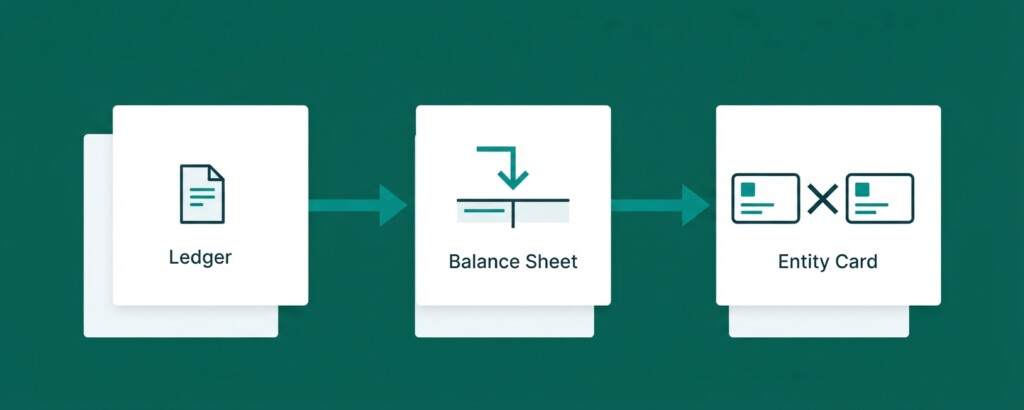
When the intercompany loan is denominated in a currency other than one or both entities’ functional currencies, the mismatch problem becomes more complex. In the IC-003 example above, SubCo UK has lent AUD 200,000 to SubCo AU. SubCo UK records the receivable in GBP (its functional currency), translating at the spot rate each month end. SubCo AU records the payable in AUD (its functional currency). At consolidation, both must be translated to the group presentation currency.
FX translation differences on intercompany monetary items are recognised in the income statement at entity level under IFRS (IAS 21), but these translation differences on long-term intercompany loans that form part of the net investment in a foreign operation are reclassified to other comprehensive income at group level. This is a common source of confusion. The key point for reconciliation purposes is that you must agree the foreign currency principal and accrued interest amounts first, before translating — otherwise you are reconciling a currency-translated number that includes both an accrual timing difference and an FX rate difference, making it very difficult to isolate the root cause.
Building a Repeatable Month-End Process
A one-off reconciliation fixes this month. A robust process prevents it from becoming a recurring problem. At minimum, your intercompany loan reconciliation process should include the following steps in sequence before the consolidation run.
- Circulate the intercompany loan register to all relevant entities at month-end open, confirming principal balances and accrual rates.
- Require each entity to submit its intercompany accrued interest calculation, showing the day-count convention and period applied.
- Compare lender and borrower submissions in a central reconciliation schedule and flag any differences above a defined materiality threshold.
- Investigate and resolve differences before raising any elimination journals — determine whether the issue is a timing difference, a day-count mismatch, or a genuine error.
- Raise consolidation adjustments for any remaining differences that cannot be corrected at entity level before the reporting deadline.
- Document every adjustment with a clear narrative, including the calculation basis, so that auditors and future team members can follow the logic.
- Roll the reconciliation forward as the opening position for the following month so that timing differences are tracked cumulatively.
Where Manual Processes Break Down
Most SME finance teams manage this process in Excel. A consolidation workbook pulls trial balances from each entity, a separate reconciliation tab compares intercompany balances, and a journal log tracks adjustments. This works reasonably well when the group has two or three entities. As the group grows, the same approach becomes fragile. Version control errors, formula breaks, and manual data entry mistakes are common. More importantly, the process is person-dependent — if the controller who built the spreadsheet leaves, the logic is often opaque to whoever takes over.
Automated consolidation tools address this by enforcing a consistent intercompany matching process across entities. When each entity posts its intercompany loan balance and accrual to a defined chart of accounts, the system can flag mismatches automatically, apply pre-defined elimination rules, and produce an audit trail of every adjustment. The month-end workload shifts from building and checking spreadsheets to reviewing exceptions — which is where a finance team’s time is better spent.
Key Controls to Implement Now
Regardless of whether your group uses a dedicated consolidation platform or a well-structured Excel model, the following controls will reduce intercompany loan reconciliation errors materially.
Agree the day-count convention and accrual frequency in the loan agreement itself, and ensure both entities’ accounting teams have read it. A surprising number of intercompany mismatches exist simply because the subsidiary’s finance team was not given a copy of the agreement and made a reasonable but incorrect assumption about how interest accrues.
Introduce a group intercompany accounting policy that mandates monthly accruals for all intercompany financial instruments, regardless of when cash settlement occurs. This removes the most common source of timing differences. Where a subsidiary’s local statutory requirements conflict with this policy, the subsidiary records as required locally and a consolidation adjustment is made in the group books — but the adjustment should be documented and tracked as a standing difference rather than rediscovered each month. Establish a materiality threshold below which differences are waived and above which a full investigation is required. This prevents the team from spending significant time on immaterial rounding differences while ensuring genuine errors are caught.
Summary
Intercompany loan balance mismatches arising from different accrual schedules are entirely preventable with the right combination of policy, process, and tooling. The mechanics are straightforward: calculate the correct accrual for each period based on the loan agreement, require each entity to record it, compare the results before the consolidation run, and raise a top-side adjustment for anything that cannot be corrected at source. The elimination then runs cleanly, and the consolidated financial statements carry no intercompany balances. The harder challenge is building a process that is consistent, documented, and scalable as the group grows — which is where investing in structured intercompany accounting workflows, whether in Excel or a dedicated platform, pays the largest dividend in reduced month-end workload and reduced audit queries.
See How Automated Consolidation Handles Intercompany Matching
BrizoConsol is built for SME finance teams managing multi-entity consolidation, intercompany eliminations, and group reporting. See how it handles the reconciliation and elimination workflows described in this article.