How to Consolidate a Multi-SPV Property Group When Each Vehicle Has Its Own Intercompany Loan From the Holding Company
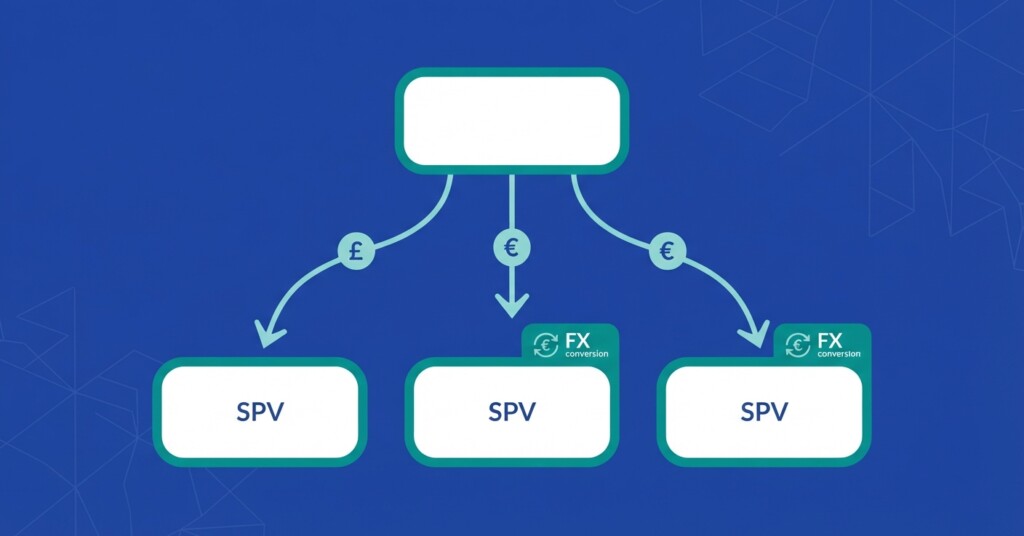
Property groups structured through special purpose vehicles (SPVs) are commonplace — each asset sits in its own legal entity for liability separation, financing, and tax efficiency. But when the holding company has lent money to every SPV in the group, the consolidated accounts quickly become a maze of intercompany balances, interest charges, and FX translation adjustments. This article works through the practical accounting mechanics of consolidating a multi-SPV property group where every vehicle carries an intercompany loan from HoldCo, and explains how finance teams can manage the process without drowning in spreadsheets.
Why Multi-SPV Structures Create Consolidation Complexity
A typical property group might look like this: a UK-incorporated holding company (HoldCo) owns 100% of three SPVs — one UK residential property company, one Irish commercial property vehicle, and one German logistics warehouse entity. HoldCo has capitalised each SPV partly through equity and partly through intercompany loans. The loans carry interest, which means each SPV has an interest payable line on its P&L, and HoldCo has a corresponding interest receivable line. When you consolidate, every one of those loan balances, interest charges, and accruals must be eliminated — and two of the three SPVs present in euros, not sterling.
The result is a consolidation process with at least four layers of work: translating non-sterling entities into the group presentation currency; eliminating intercompany loan balances; eliminating intercompany interest income and expense; and checking that any FX differences arising on monetary intercompany balances are correctly accounted for — either in P&L or in other comprehensive income (OCI), depending on the nature of the balance.
Intercompany eliminations without the manual work.
BrizoConsol identifies and eliminates intercompany balances automatically at consolidation.
Step 1 — Translate Each Foreign SPV Into the Presentation Currency
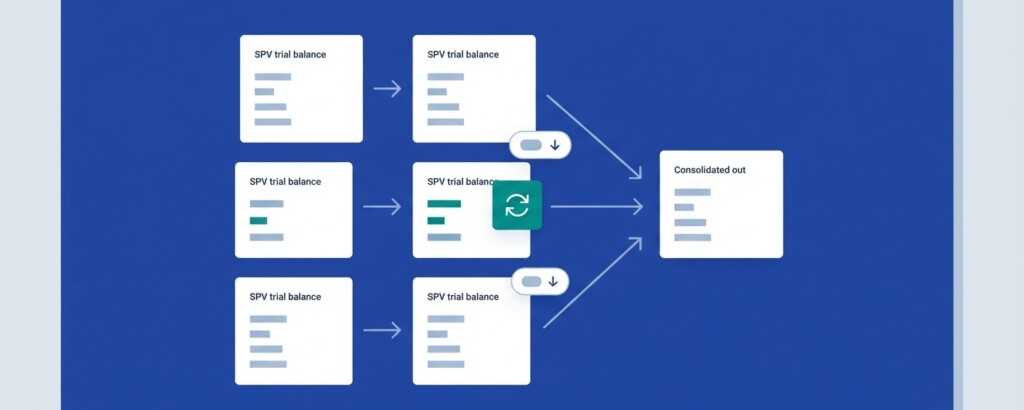
Before any intercompany elimination can happen, you need every entity reporting in the same currency. Under IFRS (IAS 21) and UK GAAP (FRS 102 Section 30), the closing rate method applies when translating the financial statements of a foreign operation. Assets and liabilities are translated at the closing rate; income and expenses at the average rate for the period; and equity at historical rates. The difference drops into OCI as a foreign currency translation reserve (FCTR).
| Irish SPV total assets (€ 4,800,000 × closing rate 0.8600) | £ 4,128,000 |
| Irish SPV total liabilities (€ 3,100,000 × closing rate 0.8600) | £ 2,666,000 |
| Irish SPV net assets at closing rate | £ 1,462,000 |
| Irish SPV P&L for period (€ 210,000 × average rate 0.8750) | £ 183,750 |
| Opening equity translated at historical rate | £ 1,295,000 |
| FCTR (balancing figure to OCI) | – £ 16,750 |
A practical tip: pin down your closing and average rates before the consolidation pack is distributed to each entity. Inconsistent rates applied at entity level versus group level are one of the most common causes of unexplained intercompany differences at month-end.
Step 2 — Map Every Intercompany Loan Balance Across the Group
Before you can eliminate anything, you need a complete intercompany loan schedule. For a three-SPV group, you might have three separate loan agreements — each with its own outstanding principal, accrued interest, and possibly a different currency denomination. The schedule below illustrates a simplified example.
| Entity | Loan Currency | Loan Principal | Accrued Interest Payable | HoldCo Carrying Value (£ translated) |
|---|---|---|---|---|
| UK SPV | GBP | £ 1,200,000 | £ 18,000 | £ 1,218,000 |
| Irish SPV | EUR | € 900,000 (£ 774,000) | € 13,500 (£ 11,610) | £ 785,610 |
| German SPV | EUR | € 1,500,000 (£ 1,290,000) | € 22,500 (£ 19,350) | £ 1,309,350 |
| Total (HoldCo loan receivable) | £ 3,312,960 |
Notice that HoldCo denominated the Irish and German loans in euros. This creates a monetary item in a foreign currency on HoldCo’s own books, which must be retranslated at each balance sheet date under IAS 21. The resulting exchange gain or loss sits in HoldCo’s P&L — and it is not eliminated on consolidation if the loan is not part of the net investment in the subsidiary. This is a common area of confusion.
If the euro-denominated intercompany loans qualify as part of the net investment in the foreign subsidiaries under IAS 21.15 (because settlement is neither planned nor likely in the foreseeable future), exchange differences continue to be recognised in P&L in HoldCo’s separate financial statements under IAS 21.32, but are reclassified to OCI in the consolidated financial statements. This requires documented intent and a consistent accounting policy. Without meeting these criteria, you must leave the FX differences in consolidated P&L. Take advice before choosing your treatment.
Step 3 — Eliminate Intercompany Loans and Interest in the Consolidation
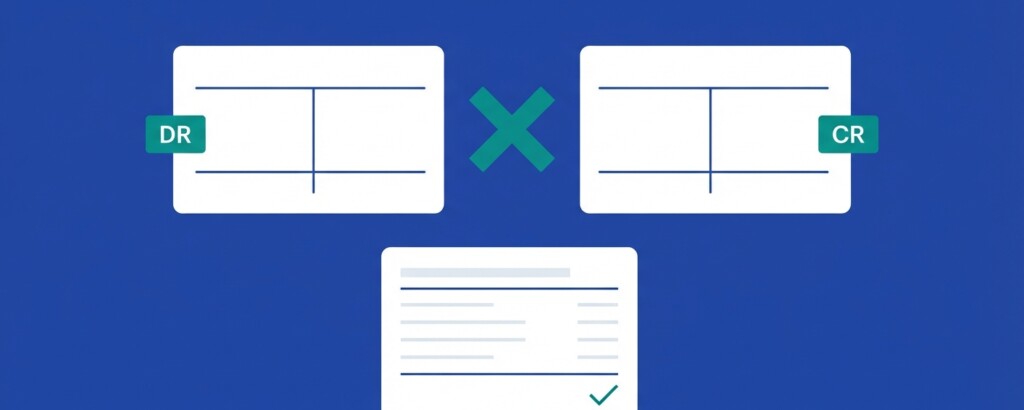
Once every entity is in sterling, you run the elimination journals. The principle is straightforward: the loan receivable on HoldCo’s balance sheet and the loan payable on each SPV’s balance sheet are the same economic transaction — they cancel each other in the consolidated view. Similarly, interest income recognised by HoldCo and interest expense recognised by each SPV must net to zero at group level.
| Account | Dr | Cr |
|---|---|---|
| Intercompany Loan Payable — UK SPV | 1,200,000 | |
| Accrued Interest Payable — UK SPV | 18,000 | |
| Intercompany Loan Receivable — HoldCo | 1,200,000 | |
| Accrued Interest Receivable — HoldCo | 18,000 |
Elimination of intercompany loan and accrued interest between HoldCo and UK SPV on consolidation. Both sides translate to GBP at the same rate so no FX difference arises.
| Account | Dr | Cr |
|---|---|---|
| Interest Income — HoldCo (UK SPV loan) | 72,000 | |
| Interest Expense — UK SPV | 72,000 |
Elimination of intercompany interest charged by HoldCo to UK SPV for the period. The £72,000 is the annual interest at 6% on £1,200,000 principal, recognised symmetrically by both parties.
| Account | Dr | Cr |
|---|---|---|
| Intercompany Loan Payable — Irish SPV (translated) | 774,000 | |
| Accrued Interest Payable — Irish SPV (translated) | 11,610 | |
| Intercompany Loan Receivable — HoldCo | 774,000 | |
| Accrued Interest Receivable — HoldCo | 11,610 |
Elimination of intercompany loan and accrued interest between HoldCo and Irish SPV after FX translation of the SPV’s euro balances to sterling at the closing rate of 0.8600.
One subtlety to watch: after FX translation, the SPV’s loan payable in sterling may not exactly match the sterling equivalent of HoldCo’s loan receivable if different rates were applied at different points in time. This is the FX difference on monetary intercompany items — it must be traced, understood, and either reclassified to OCI (if the loan qualifies for net investment accounting) or left to flow through consolidated P&L.
Step 4 — Handle Non-Controlling Interests If Applicable
In a straightforward 100%-owned SPV structure, there is no non-controlling interest (NCI) to calculate. But property groups occasionally bring in a co-investor at SPV level — perhaps a 20% minority co-investor in the German warehouse vehicle where HoldCo retains control. If that is the case, the NCI calculation must reflect the appropriate post-elimination adjustments and FX translation. The NCI share of the German SPV’s net assets and P&L is calculated on the translated figures, and the NCI’s portion of any FCTR also flows to the NCI rather than to the group equity reserve.
- Translate German SPV financials into sterling at closing and average rates.
- Calculate group-level intercompany eliminations (the full loan, not just 80%).
- After eliminations, split net assets and P&L 80% to equity holders and 20% to NCI.
- Allocate 20% of the FCTR arising on the German SPV to the NCI in equity.
- Disclose NCI separately on the face of the consolidated balance sheet and P&L.
Step 5 — Produce the Consolidated Group Reporting Pack
Once eliminations are complete, the group reporting pack consolidates the translated and adjusted figures from every SPV and HoldCo into a single set of statements: consolidated P&L, balance sheet, cash flow statement, and equity movement schedule. For a property group, management will typically want additional schedules — loan-to-value ratios per property, interest cover by SPV, and a maturity profile of the intercompany loans — alongside the statutory consolidated numbers.
The financial close process for a multi-SPV property group should follow a defined sequence. Entity-level trial balances must be finalised and any adjusting journals posted before the consolidation pack is opened. FX rates must be agreed centrally. The intercompany loan reconciliation must be signed off before eliminations are posted. Only then should group adjustments — goodwill impairment or amortisation, fair value uplifts, deferred tax — be applied at consolidation level.
Intercompany reconciliation is the single biggest source of delay in multi-entity close processes. If HoldCo and each SPV are reconciling their intercompany positions independently in separate spreadsheets, discrepancies will emerge — and tracing them back to a missed accrual or a timing difference can cost hours at month-end. Keeping all intercompany data in one connected system dramatically reduces this friction.
Where Manual Spreadsheet Processes Break Down
For a group with three SPVs, a skilled controller can manage the consolidation in Excel — but it takes time, requires version control discipline, and is highly sensitive to human error. The intercompany loan schedule alone involves three currencies, closing and average rates, and a cross-check between HoldCo’s receivable schedule and each SPV’s payable schedule. Add a quarterly revaluation of the investment properties, deferred tax movements, and an NCI calculation, and the month-end model grows unwieldy fast.
Automated consolidation tools address this by storing trial balances from each entity in a single data model, applying FX translation rules consistently, generating intercompany matching reports, and posting elimination journals automatically once intercompany positions are confirmed as reconciled. The output — consolidated P&L, balance sheet, and supporting schedules — is produced from a single version of the data rather than assembled from multiple linked workbooks. Finance teams that move to this approach typically find that the consolidation itself takes hours rather than days, freeing time for analysis and review.
Common Errors to Avoid in Multi-SPV Consolidations
- Translating the intercompany loan payable at the average rate rather than the closing rate — monetary items must use the closing rate.
- Forgetting to eliminate accrued interest as well as the loan principal — both are intercompany balances.
- Recognising FX differences on an intercompany loan in OCI when the net investment criteria under IAS 21.15 have not been met and documented.
- Applying NCI calculations before relevant intercompany eliminations, which distorts the NCI share.
- Using inconsistent FX rates between HoldCo and the SPVs, creating phantom intercompany differences.
- Omitting the FCTR from the equity movement schedule, leading to a balance sheet that does not reconcile.
Putting It Together: A Practical Checklist for the Finance Team
Running a clean consolidation for a multi-SPV property group comes down to process discipline as much as technical knowledge. The accounting standards are well established — IAS 27, IFRS 10, and IAS 21 cover the key ground for IFRS reporters, with FRS 102 Sections 9 and 30 for UK GAAP preparers. The challenge is executing consistently across multiple entities, multiple currencies, and multiple loan agreements, month after month. A clear close calendar, centralised FX rates, and a single intercompany reconciliation tool go further than almost any other improvement.
- Issue closing and average FX rates to all entities at least two days before close.
- Collect trial balances from all SPVs in their local currencies before translation.
- Translate each foreign SPV using the closing rate for balance sheet items and average rate for P&L.
- Run the intercompany loan reconciliation — agree principals and accrued interest between HoldCo and each SPV.
- Post elimination journals for loan balances, accrued interest, interest income, and interest expense.
- Review FX differences on monetary intercompany items and confirm net investment qualification if applicable.
- Calculate NCI on post-elimination, post-translation figures if any SPV is not 100% owned.
- Apply group-level adjustments (deferred tax, fair value movements, goodwill) at consolidation level.
- Produce consolidated P&L, balance sheet, equity movement, and cash flow.
- Reconcile the FCTR balance in equity as a final check before sign-off.
Multi-SPV consolidations are not conceptually difficult, but they are process-intensive. The finance teams that manage them well are the ones who have standardised every step — from how intercompany loans are documented to how FX rates are applied — so that the close cycle is predictable and the risk of error is low. For growing property groups adding new SPVs each year, investing in the right process and tooling early pays dividends every single month-end.
See How Automated Consolidation Handles Multi-SPV Groups
If your team is managing intercompany loans, FX translation, and group eliminations across multiple property vehicles, see how a purpose-built consolidation tool can reduce the manual work and give you a clean consolidated view every month.