How to Build a Recurring Journal Template That Automatically Generates the NCI Profit Allocation Entry Every Period Without Manual Recalculation
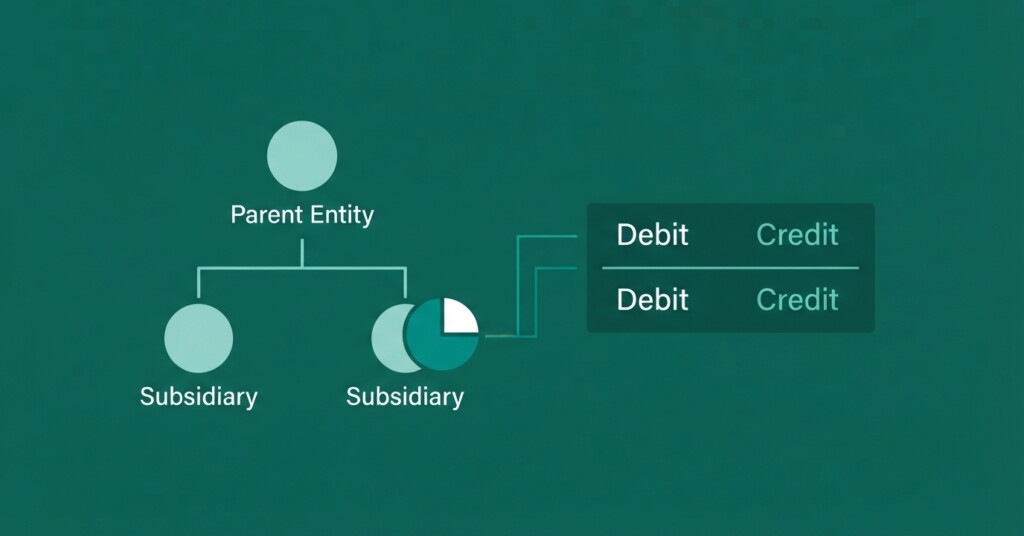
For finance teams managing group structures with partly-owned subsidiaries, the non-controlling interest profit allocation entry is one of those recurring month-end tasks that looks simple on paper but consistently causes delays, errors, and reconciliation headaches. Every period, someone needs to calculate the NCI share of the subsidiary’s net profit, post the allocation journal, update the NCI equity balance, and make sure everything ties back to the consolidation working papers. When that subsidiary operates in a foreign currency, or when there are multiple partly-owned entities, the manual workload compounds quickly. This article walks through how to design a recurring journal template that handles the NCI profit allocation automatically, so your team can close faster and with greater confidence.
Why the NCI Profit Allocation Entry Is Prone to Error
The NCI profit allocation is not conceptually difficult. At its core, you are allocating the subsidiary’s net profit (adjusted for consolidation entries such as acquisition-date fair value amortisation and upstream unrealised profit eliminations) between the parent’s share and the non-controlling interest. But in practice, several factors make this entry error-prone when handled manually each period.
First, the input data changes every period. The subsidiary’s net profit fluctuates, which means the NCI dollar amount changes even when the percentage ownership stays constant. Someone has to retrieve the correct profit figure from the subsidiary’s trial balance, ensure any relevant consolidation adjustments are applied, calculate the NCI percentage, and enter the result into the consolidation journal. If that person is working from a prior-period template and forgets to update the source figure, the entry will be wrong — and it may not be caught until a later review or audit.
Automate NCI calculations across all your entities.
BrizoConsol handles non-controlling interest automatically — no manual adjustments required.
Second, when the subsidiary reports in a foreign currency, there is an additional FX translation step before the profit allocation can be calculated. The translated profit figure must be used, not the functional-currency amount, which adds another manual touchpoint.
Third, most groups have the NCI calculation buried inside a consolidation Excel workbook. That workbook grows over time, accumulates version-control problems, and becomes difficult for a new team member to follow. The journal entry itself often ends up being typed manually into the general ledger or the consolidation tool, creating yet another point of failure.
The goal of a recurring NCI journal template is to replace the manual retrieval-calculate-post cycle with a structured, formula-driven process where the only human task is reviewing and approving — not recalculating.
Understanding the Core NCI Profit Allocation Mechanics
Before building the template, it helps to be precise about what the journal is actually doing. When a parent consolidates a partly-owned subsidiary, it includes 100% of the subsidiary’s revenues and expenses in the group income statement. It then allocates the portion of net profit that belongs to minority shareholders down to the NCI line. On the balance sheet, the NCI equity balance is updated each period to reflect the accumulated share of profits (less any dividends paid to NCI holders, plus or minus other comprehensive income such as foreign currency translation reserves).
Assume Parent Co owns 70% of Sub A. Sub A earns an adjusted net profit of £200,000 in the period. The NCI share is 30%, which is £60,000. This amount reduces the profit attributable to the parent’s equity holders and increases the NCI equity balance. If Sub A later pays a dividend and 30% flows to minority shareholders, the NCI equity balance decreases by that amount.
| Sub A net profit (period) | £200,000 |
| NCI ownership percentage | 30% |
| NCI profit allocation (£200,000 × 30%) | £60,000 |
| Account | Dr | Cr |
|---|---|---|
| Profit attributable to NCI (P&L / equity transfer) | 60,000 | |
| NCI equity reserve (balance sheet) | 60,000 |
Period NCI profit allocation: 30% of Sub A net profit £200,000. Debit reduces group profit attributable to parent; credit increases NCI equity balance on consolidated balance sheet.
This entry must balance, must use the correctly translated profit figure if Sub A is a foreign operation, and must be reversed or superseded if restated profit figures come through before the books are closed. A template that hard-wires the NCI percentage and pulls profit from a live or confirmed trial balance dramatically reduces the chance of error.
Designing the Recurring Template: Inputs and Structure
A well-designed recurring NCI journal template has three layers: a static configuration section, a dynamic calculation section, and a journal output section. Whether you build this in Excel, a consolidation platform, or a connected reporting tool, the structure is the same.
The static configuration section stores information that changes infrequently: the subsidiary name and entity code, the NCI ownership percentage, the functional currency of the subsidiary, the reporting currency of the group, the NCI equity account code, and the P&L allocation account code. These values are entered once and updated only when ownership changes (for example, following an acquisition or partial disposal).
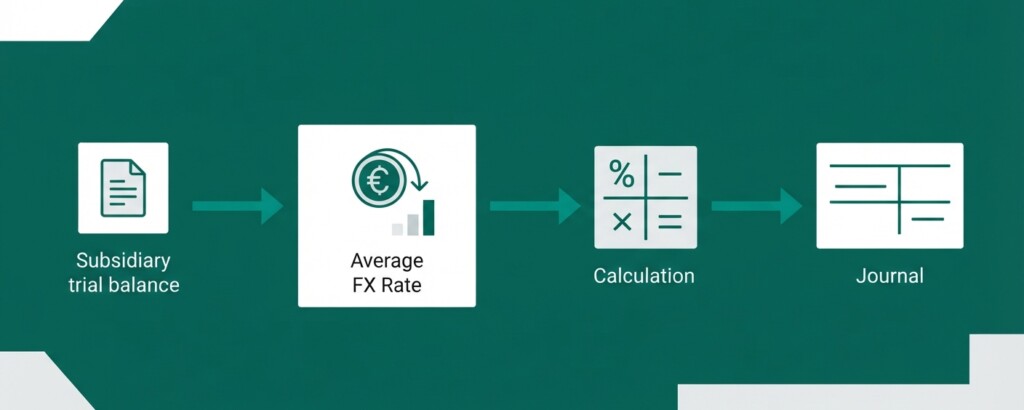
The dynamic calculation section pulls the current-period net profit of the subsidiary — ideally by reference to a mapped trial balance or a confirmed profit figure (including any required consolidation adjustments) — and applies the NCI percentage. If the subsidiary is a foreign operation, it also applies the average exchange rate for the period to translate the functional-currency profit into the group reporting currency before the percentage is applied.
| Template Layer | Key Inputs | Frequency of Update |
|---|---|---|
| Static configuration | NCI %, entity code, account codes, currency pair | Only on ownership change |
| Dynamic calculation | Period net profit, average FX rate for period | Every period |
| Journal output | Calculated NCI amount, debit/credit mapping, period reference | Every period (auto-generated) |
The journal output section formats the calculated amounts into a postable journal entry, including the period reference, a narrative description, and the debit and credit account codes. If your general ledger or consolidation tool supports journal import, this section can be formatted as a CSV or structured file that is loaded directly, eliminating manual data entry entirely.
Handling Foreign Currency Subsidiaries
When the subsidiary operates in a currency different from the group’s reporting currency, the NCI allocation must be based on the translated profit, not the functional-currency profit. Under IFRS 10 and IAS 21, income statement items of a foreign operation are typically translated at the average rate for the period. Your template should reference the confirmed average rate for the period, not carry forward a prior-period rate.
For example, if Sub A reports in euros and the group reports in sterling, and Sub A earns €240,000 net profit in a period where the average EUR/GBP rate is 0.8600, the translated profit is £206,400. The NCI share at 30% is then £61,920. If someone uses last month’s rate of 0.8750 instead, the NCI entry will be £63,000 — a £1,080 difference that will need to be explained at year-end.
Never allow the FX rate in your NCI template to roll forward automatically from the previous period. The average rate must be confirmed for each new period before the template is used. Build a validation step — such as a required field check or an approval flag — to prevent the template from generating a journal if the rate field has not been updated.
Some consolidation platforms maintain a central rate table that feeds all translation calculations. If your system works this way, the template can reference the rate table directly rather than requiring manual rate input, which removes another failure point. The key principle is that the rate must be traceable and period-specific.
Extending the Template for Multiple Partly-Owned Subsidiaries
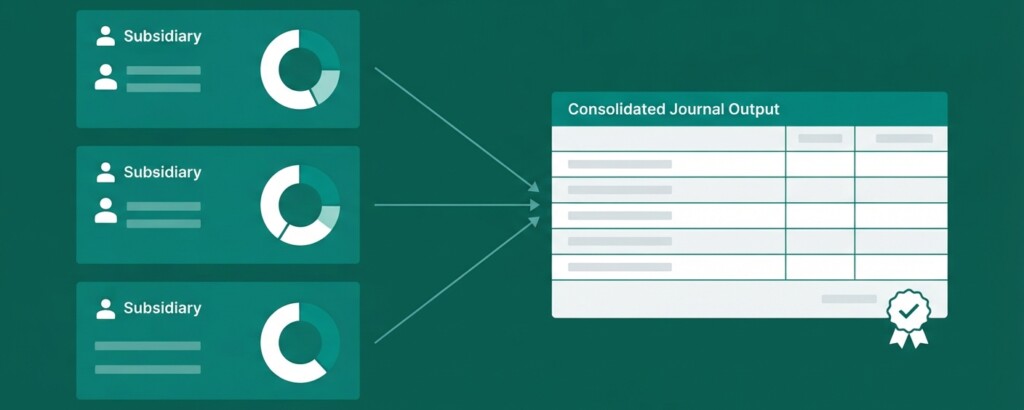
Groups with more than one partly-owned subsidiary need a separate NCI calculation for each entity, because the ownership percentages, currencies, and profit figures will all differ. The cleanest approach is to build a modular template where each subsidiary has its own configuration block and calculation section, and the journal output section aggregates all the individual entries into a single period run.
When aggregating, keep the individual entity calculations visible and auditable. Lumping all NCI entries into a single line makes it very difficult to review or explain the amounts during audit. A good template produces one journal line per subsidiary — or at minimum, a supporting schedule that shows the build-up — so reviewers can trace each amount back to its source.
Connecting the Template to Live Accounting Data
The biggest weakness of a static Excel-based template is that the profit figure must be entered manually each period. Even with a well-designed template, someone still has to retrieve the subsidiary’s net profit from its accounting system, confirm the figure is final (not a draft), and type it into the template. This step is where errors creep in, particularly when the subsidiary uses a different accounting platform or reports late.
Connected consolidation tools that integrate directly with subsidiary general ledgers can solve this. When the subsidiary’s trial balance data flows automatically into the consolidation layer, the net profit figure is always current and always sourced from the confirmed ledger balance. The NCI template can then reference this mapped profit figure directly, and the journal is generated from live data rather than a manually entered number.
This kind of connectivity also makes it easier to handle mid-period restatements. If a subsidiary restates its profit figure before the books are closed, a connected template will reflect the updated figure automatically. A manual template requires someone to notice the restatement, update the input, and regenerate the journal — steps that are easy to miss under month-end time pressure.
Review, Approval, and Audit Trail
Even when the NCI journal is generated automatically, a human review step is essential. The reviewer should confirm that the subsidiary’s net profit figure is final and agreed, that consolidation adjustments affecting subsidiary results have been incorporated, that the FX rate is the confirmed period average, that the NCI percentage is current (no ownership change during the period), and that the journal balances. This review can be documented with a simple sign-off checklist attached to the journal.
- Confirm subsidiary net profit is final and reconciled to the approved trial balance (including relevant consolidation adjustments such as fair value amortisation or upstream unrealised profits).
- Verify the average FX rate is the confirmed period rate, not a roll-forward from prior period.
- Check that NCI ownership percentage reflects the current ownership structure.
- Confirm the journal debits and credits balance to zero.
- Review the NCI equity balance on the consolidated balance sheet for reasonableness.
- Document the review and obtain approval before posting.
Maintaining a clear audit trail matters particularly for groups subject to external audit. Auditors will want to see how the NCI profit allocation was calculated, what source data was used, and who approved the journal. A template that is self-documenting — where the calculation steps, inputs, and outputs are all visible in one place — makes the audit process significantly smoother than a journal that arrives as a single line item with no supporting workings.
Where Automation Makes the Biggest Difference
The manual NCI process typically involves: retrieving subsidiary trial balance data, translating at the average rate, applying the NCI percentage, formatting the journal, entering it into the ledger or consolidation tool, and then reconciling the NCI equity balance. For a group with two or three partly-owned subsidiaries, this cycle might take several hours per period. For a group with five or more, it can occupy a full day or more of a senior accountant’s time.
A recurring template that is connected to live trial balance data, uses a confirmed rate table, and generates a postable journal reduces this to a review-and-approve task. The time saving is real, but more importantly, the consistency is improved. Every period uses the same logic, the same account codes, and the same calculation method. This makes period-on-period comparisons meaningful and reduces the risk of one-off errors distorting the group results.
Groups that have moved their consolidation process from Excel to a purpose-built consolidation platform often cite the NCI automation as one of the most immediately valuable changes. Not because the individual calculation is complex, but because it is a recurring, error-prone task that consumes disproportionate attention during month-end close — exactly the kind of task that benefits most from a well-designed template or automated workflow.
How BrizoConsol handles this
BrizoConsol handles the NCI profit allocation as a structured, repeatable process rather than a period-by-period manual exercise. Once a subsidiary is connected — via a direct Xero integration or through Excel import for other sources — the subsidiary’s trial balance is available in the consolidation layer without re-keying. BrizoConsol applies the confirmed average exchange rate from its central rate table to translate functional-currency profit before the NCI split is calculated, so there is no risk of a stale rate rolling forward.
The non-controlling interest configuration stores the ownership percentage and account mappings for each partly-owned entity. When the period trial balance is confirmed, BrizoConsol generates the NCI profit allocation and updates the NCI equity balance automatically. Recurring journals can be saved and reused each period, and every posted entry is captured in a searchable audit trail. For groups with multiple partly-owned subsidiaries, each entity’s calculation remains separately visible, so reviewers can trace any amount back to its source trial balance without digging through a workbook.
Automate NCI calculations across all your entities.
BrizoConsol handles non-controlling interest automatically — no manual adjustments required.