How to Eliminate Intercompany Ground Rent When a PropCo Charges Multiple Residential SPVs a Fixed Annual Fee Under a Head Lease Arrangement
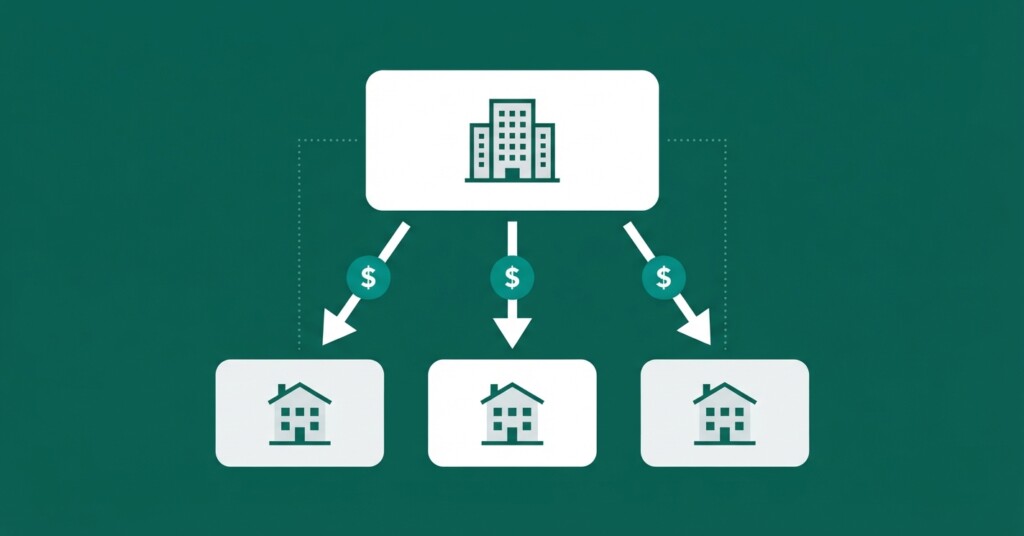
For property groups structured around a PropCo and several residential Special Purpose Vehicles (SPVs), the head lease arrangement is a common and commercially logical structure. The PropCo holds the freehold or superior lease interest and grants sub-leases to each SPV, charging a fixed annual ground rent or licence fee in return. Inside each SPV, that charge appears as a genuine operating cost. At the PropCo level, it appears as rental income. Both treatments are correct in the standalone accounts — but when you consolidate the group, every penny of that intercompany flow must disappear. Getting this right, especially across multiple SPVs with different year-end accrual positions, is one of the more fiddly intercompany eliminations finance teams face.
This article walks through the accounting mechanics, the journal entries required at consolidation, common timing mismatches, and how to build a repeatable process that does not rely on a sprawling Excel workbook that only one person understands.
Why Ground Rent Between Group Entities Must Be Eliminated
Consolidated financial statements represent the group as a single economic entity. Any transaction between two members of the same group — however arm’s-length the commercial terms — is an internal transfer of value, not a transaction with the outside world. If the PropCo charges SPV Alpha £50,000 per year in ground rent and that income is included in the consolidated P&L, the group is effectively reporting revenue it earned from itself. That inflates both revenue and cost, and it distorts EBITDA, net assets, and any metric derived from them.
Intercompany eliminations without the manual work.
BrizoConsol identifies and eliminates intercompany balances automatically at consolidation.
Under IFRS 10 and FRS 102 Section 9, all intragroup balances, transactions, income, and expenses must be eliminated in full on consolidation, regardless of whether they were transacted at arm’s length or on commercial terms.
For a group with one PropCo and, say, four residential SPVs, the elimination is not a single line — it is four separate intercompany relationships, each with its own accrual position, payment timing, and potentially its own currency if any SPV holds overseas property. The complexity scales quickly.
The Typical Structure and What the Ledgers Look Like
Consider a simplified group: PropCo is the parent (or a subsidiary of the parent) and holds the head lease over a portfolio of residential buildings. It sub-leases individual buildings to SPV Alpha, SPV Beta, and SPV Gamma, each paying £60,000 per year in fixed ground rent, payable quarterly in advance.
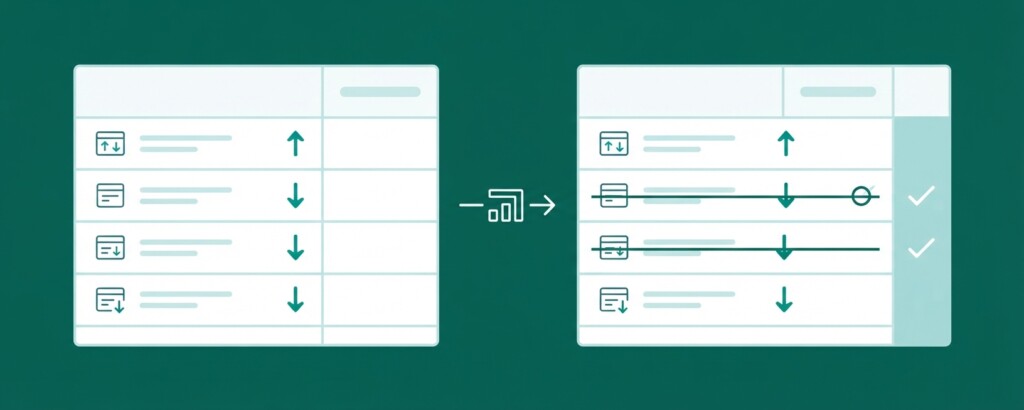
In each SPV’s standalone accounts, the annual charge is debited to a ground rent expense account and either paid in cash or accrued as a payable to PropCo. In PropCo’s standalone accounts, the same amounts are credited to a ground rent income account and either received in cash or held as a receivable from each SPV. The intercompany balances on the balance sheet mirror one another: the SPV has a creditor to PropCo; PropCo has a debtor from each SPV.
| Entity | Account | Dr / Cr | Annual Amount |
|---|---|---|---|
| SPV Alpha | Ground Rent Expense | Dr | £60,000 |
| SPV Alpha | Intercompany Payable — PropCo | Cr | £60,000 |
| SPV Beta | Ground Rent Expense | Dr | £60,000 |
| SPV Beta | Intercompany Payable — PropCo | Cr | £60,000 |
| SPV Gamma | Ground Rent Expense | Dr | £60,000 |
| SPV Gamma | Intercompany Payable — PropCo | Cr | £60,000 |
| PropCo | Intercompany Receivable — SPV Alpha | Dr | £60,000 |
| PropCo | Intercompany Receivable — SPV Beta | Dr | £60,000 |
| PropCo | Intercompany Receivable — SPV Gamma | Dr | £60,000 |
| PropCo | Ground Rent Income | Cr | £180,000 |
The Consolidation Elimination Journals
At consolidation, you need to reverse out both sides: eliminate the income in PropCo and eliminate the expense in each SPV, and then clear the matching intercompany receivable and payable balances. These are consolidation-only journals — they are posted in the consolidation workbook or system and never touch the individual entity ledgers.
The income and expense elimination is straightforward when both sides agree. Below are the consolidation journals to eliminate the P&L flows and any remaining balance sheet balances across all three ground rent relationships (which in practice you may record as three separate entity-pair journals for traceability):
| Account | Dr | Cr |
|---|---|---|
| Ground Rent Income (PropCo) | 180,000 | |
| Ground Rent Expense (SPV Alpha) | 60,000 | |
| Ground Rent Expense (SPV Beta) | 60,000 | |
| Ground Rent Expense (SPV Gamma) | 60,000 |
Eliminate intercompany ground rent income and expense for the year across all three SPV head lease arrangements. PropCo income of £180,000 and matching SPV expenses of £60,000 each are removed from the consolidated P&L.
| Account | Dr | Cr |
|---|---|---|
| Intercompany Payable — PropCo (SPV Alpha) | 60,000 | |
| Intercompany Payable — PropCo (SPV Beta) | 60,000 | |
| Intercompany Payable — PropCo (SPV Gamma) | 60,000 | |
| Intercompany Receivable — SPV Alpha (PropCo) | 60,000 | |
| Intercompany Receivable — SPV Beta (PropCo) | 60,000 | |
| Intercompany Receivable — SPV Gamma (PropCo) | 60,000 |
Eliminate intercompany balance sheet receivables and payables arising from unpaid or accrued ground rent between PropCo and each SPV. Net effect on consolidated balance sheet is nil.
Handling Timing Mismatches and Accrual Differences
The clean scenario above assumes both sides of the intercompany transaction have been recorded consistently and the balances agree. In practice, that is rarely true at month-end or year-end. Quarterly payments in advance mean that at any balance sheet date, some ground rent has been invoiced but not yet paid, or one entity has accrued the charge while the other has not yet recognised the income.
If PropCo has raised a ground rent invoice for Q4 but SPV Beta has not yet posted the matching accrual, the intercompany balances will not agree. The consolidated balance sheet will carry a residual intercompany difference. This is not eliminated by the standard journal and must be corrected at entity level or via a consolidation adjustment before the elimination is posted.
The correct fix is always to align the accrual positions first. Ask each SPV to confirm that their ground rent accrual matches the corresponding amount on PropCo’s debtor schedule. Where a difference exists, post a correcting accrual in the entity that is behind — then run the elimination. Attempting to eliminate through a consolidation journal where the two sides do not agree will leave unexplained residuals in the consolidated working papers.
A useful discipline is to run an intercompany reconciliation report before close that shows, for each entity pair, the expected balance on each side and any difference. This is the single most effective control in the intercompany elimination process.
What the Consolidated P&L and Balance Sheet Look Like After Elimination
| PropCo Ground Rent Income (standalone) | £180,000 |
| Less: Elimination of intercompany income | −£180,000 |
| Consolidated Ground Rent Income | £0 |
| SPV Alpha Ground Rent Expense (standalone) | £60,000 |
| SPV Beta Ground Rent Expense (standalone) | £60,000 |
| SPV Gamma Ground Rent Expense (standalone) | £60,000 |
| Less: Elimination of intercompany expenses | −£180,000 |
| Consolidated Ground Rent Expense | £0 |
The elimination is symmetrical. Both P&L lines go to zero in the consolidated view. The group’s external costs — the actual ground rent paid to the ultimate freeholder outside the group, if any — are unaffected and remain in PropCo’s accounts as a genuine third-party cost.
FX Considerations Where an SPV Holds Overseas Property
If one or more SPVs operate in a currency other than the group’s presentation currency, the elimination becomes slightly more involved. Suppose SPV Gamma holds a residential building in Germany and its functional currency is EUR. The ground rent it owes PropCo is denominated in GBP under the head lease, but the expense is translated into EUR in SPV Gamma’s books at the rate ruling when the transaction was recorded.
At consolidation, because SPV Gamma holds a foreign-currency monetary liability (denominated in GBP), exchange rate movements between transaction date and settlement or period-end create an exchange difference. Under IAS 21 paragraph 45 and FRS 102 paragraph 30.22, intragroup monetary items represent real economic currency exposure for the group and cannot be eliminated against one another without reflecting currency fluctuations. Because this ground rent balance is an ordinary trading item rather than part of a net investment in a foreign operation, this foreign exchange difference must remain recognised in consolidated profit or loss (P&L); it cannot be routed to other comprehensive income (OCI) or accumulated in the foreign currency translation reserve.
Building a Repeatable Process for Monthly Close
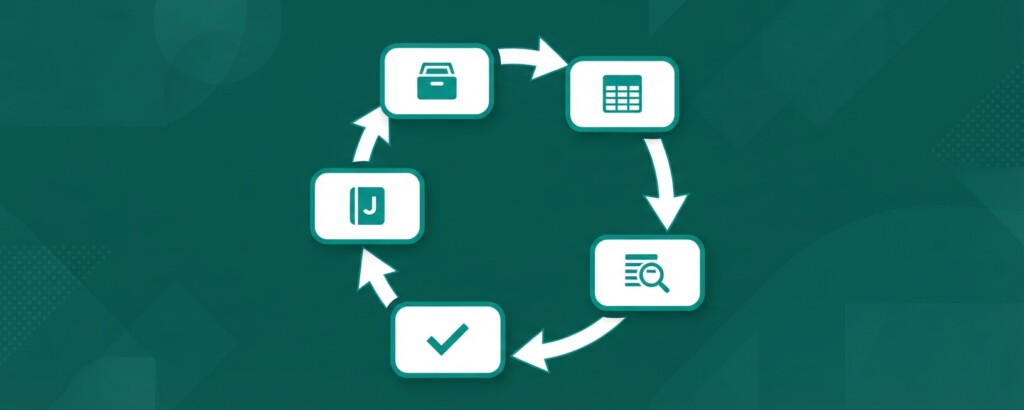
For groups with three or more SPVs all paying ground rent to the same PropCo, the elimination is not a one-off exercise — it recurs every reporting period. A sustainable process has the following characteristics:
- Maintain a master intercompany schedule that lists every entity pair, the contracted annual ground rent amount, the payment frequency, and the current accrual position for each side.
- At each period-end, run an intercompany matching report before posting eliminations to surface any disagreements between PropCo’s receivable and each SPV’s payable.
- Resolve timing differences at entity level by posting correcting accruals — do not patch mismatches through consolidation journals.
- Post the income and expense elimination journal first, then the balance sheet elimination journal, keeping each as a separate, documented consolidation entry.
- Where FX movements are involved on intercompany balances, ensure the resulting exchange difference remains recognised in profit or loss in line with IAS 21 and FRS 102, rather than being incorrectly routed to OCI.
- Retain the consolidation working papers as an audit trail, referencing the intercompany schedule and the entity-level accrual confirmations.
Groups that manage this process in Excel quickly find that the workbook becomes unwieldy. A single version of the intercompany schedule needs to be shared with PropCo’s finance team and all SPV controllers, version-controlled, reconciled, and then fed into the consolidation model — all before the elimination journals can be posted. When the number of entities grows, or when reporting timelines tighten, this becomes a material risk to close quality and timeliness.
Consolidation software that holds each entity’s trial balance, knows the intercompany relationships, and can automatically match and flag disagreements before generating elimination journals removes a significant portion of this manual effort. The finance team’s role shifts from building and checking the workbook to reviewing the matched output and signing off the elimination — a much better use of skilled finance resource.
Key Takeaways for PropCo and SPV Groups
- Ground rent charged by a PropCo to residential SPVs under a head lease is a genuine commercial transaction in standalone accounts but must be fully eliminated on consolidation.
- The elimination removes both the income (PropCo) and the expense (each SPV) from the consolidated P&L, and clears the matching receivable and payable from the consolidated balance sheet.
- Timing mismatches — caused by quarterly advance payments, invoicing lag, or accrual differences — must be resolved at entity level before elimination journals are posted.
- Foreign exchange differences arising on intercompany ground rent balances must remain recognised in profit or loss (P&L) under IAS 21 and FRS 102, as trading balances do not qualify for OCI treatment.
- A repeatable, documented process built around an intercompany schedule and a pre-elimination matching report is far more reliable than an ad hoc end-of-period exercise.
Automate Your Intercompany Eliminations
BrizoConsol is built for groups with multiple entities, subsidiaries, and intercompany relationships. Load trial balances, define your intercompany relationships, and let the system match, flag, and eliminate — so your finance team spends less time reconciling and more time on insight.
Intercompany eliminations without the manual work.
BrizoConsol identifies and eliminates intercompany balances automatically at consolidation.